
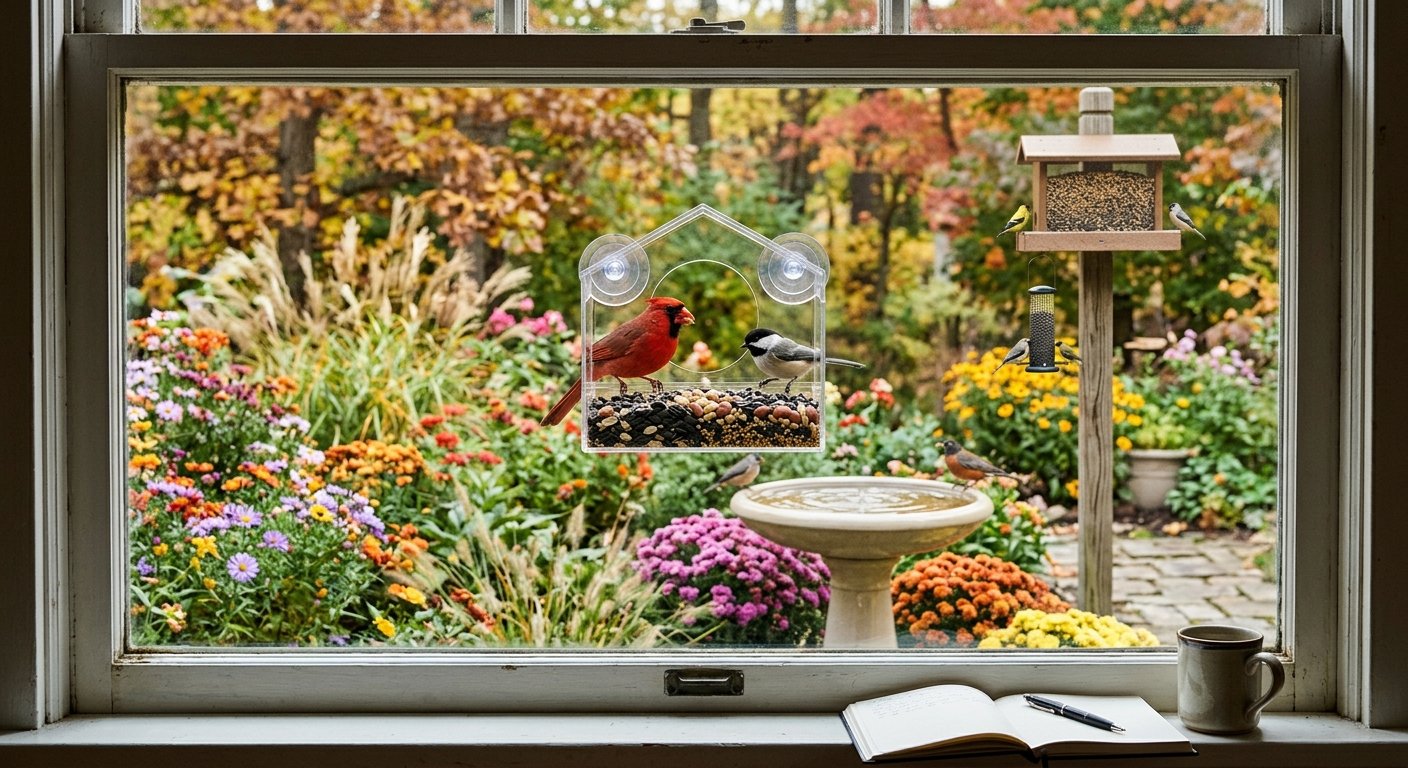
I still clearly remember the autumn morning I installed my first serious feeding station. I had my coffee ready, sat by the window with my binoculars, and expected an immediate wave of songbirds. Instead, days passed in silence. It was a humbling lesson every birdwatcher learns sooner or later: attracting wild birds isn’t just about putting out food—it’s about understanding their natural rhythms.
I wrote this guide because “When should I start?” is one of the most frequent questions I receive from fellow birders and wildlife enthusiasts. Setting up too late means missing the peak migration activity, while setting up without a clear strategy often leads to empty feeders and wasted seed.
Whether you are aiming to support year-round resident species, assist weary autumn migrants, or simply photograph backyard birds from your window, your success hinges on timing.
In this guide, I’ll dive into the seasonal biology of bird feeding, break down how changing weather alters foraging behavior, and outline the exact steps to establish a safe, highly active feeding station this season.
The Ideal Timing: When to Set Up Your Feeders
If you ask ten different birders when to hang your feeders, you will likely get ten different answers ranging from “only during heavy snow” to “365 days a year.” But if your goal is to support local species effectively while maximizing bird activity in your yard, the sweet spot is Early Autumn (Late September to Mid-October) across most temperate climates.
Setting up your station before the harsh freeze arrives gives you a front-row seat to one of the most dynamic shifts in the avian calendar. Here is why launching in early autumn makes all the difference:
1. Refueling Exhausted Migrants
Autumn is peak migration time. Millions of songbirds—from warblers and sparrows to thrushes—are making perilous long-distance journeys to their wintering grounds. Flyways demand an immense amount of energy, and birds can lose a significant percentage of their body weight in a single night of flight.
Offering high-energy, fat-rich foods like black oil sunflower seeds, shelled peanuts, and high-quality suet provides a vital lifeline. Your feeding station becomes a critical refueling stop where tired migrants can rest, stock up on essential calories, and regain the strength needed to complete their journey.
2. Helping Resident Birds Map Their Winter Territories
While migratory birds are passing through, year-round resident species—such as chickadees, nuthatches, titmice, and woodpeckers—are busy planning for the cold months ahead. These birds don’t wait for a snowstorm to start searching for food; they begin scouting their winter feeding territories weeks before severe weather hits.
When you set up your feeders in late September or October, local birds discover your yard early. They take mental notes, learn that your space is safe from predators, and bookmark it as a primary daily food stop. By the time winter truly sets in, your yard will already be a well-established hub on their daily foraging route.
3. Creating a Smooth Seasonal Transition
In early autumn, nature still seems bountiful with wild berries, lingering insects, and weed seeds. However, as nighttime temperatures plummet and daylight shrinks, those natural food supplies dry up surprisingly fast. Insect activity drops sharply after the first hard frost, and wild fruit gets picked clean.
Introducing your feeding station in early autumn prevents a sudden food scarcity shock for local wildlife. Instead of forcing birds to search desperately for new food when temperatures drop below freezing, early feeding eases their transition, ensuring they maintain healthy weight reserves as winter approaches.
2. Does Feeding Birds Early Stop Them from Migrating?
One of the most persistent myths in the birdwatching community—especially among beginners—is the belief that putting out feeders in early autumn will trick migratory birds into staying put. The fear is understandable: no one wants to accidentally prevent a songbird from flying south before the harsh winter weather arrives.
However, decades of ornithological research prove that this concern is entirely unfounded.
Feeding wild birds in late summer or early autumn will not delay or stop their migration. To understand why, we have to look at the powerful evolutionary triggers that control bird movement.
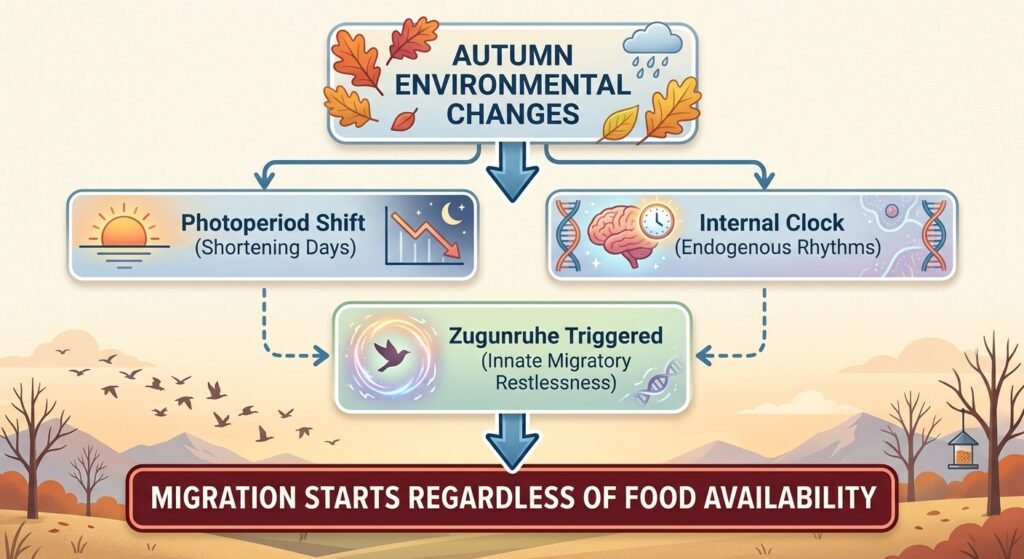
The Science: What Actually Triggers Migration?
A bird’s urge to migrate is governed by complex biological mechanisms that far outweigh the presence of a backyard feeder:
- Photoperiodism (Day Length): The primary trigger for avian migration is photoperiod—the changing ratio of daylight to darkness. As days shorten in autumn, the decrease in sunlight acts as a biological signal detected by the bird’s brain. This change triggers hormonal shifts that initiate migratory behavior, regardless of how much food is available nearby.
- Circannual Rhythms & Endogenous Clocks: Birds possess innate genetic “clocks” (circannual rhythms) that dictate seasonal behavior. Studies published by leading ornithological institutes, including the Cornell Lab of Ornithology and the Audubon Society, consistently show that migratory impulses are hardwired into a bird’s genetics.
- Zugunruhe (Migratory Restlessness): Before migrating, birds experience a state known as Zugunruhe—an innate, internal restlessness accompanied by heavy feeding (hyperphagia) to store fat. Even captive birds held in laboratories with unlimited food and constant temperatures exhibit Zugunruhe when migration season arrives, proving that food abundance alone cannot override the instinct to move.
How Early Feeding Actually Helps Migrants
Far from trapping birds in place, early autumn feeding provides critical support to birds navigating demanding journeys:
- Fueling Hyperphagia: To prepare for flights that can span thousands of miles, birds must double their body mass in fat reserves. High-energy food from feeders (such as black oil sunflower seeds, peanuts, and suet) helps birds accumulate these vital fat stores quickly and efficiently.
- Emergency Refueling Stops: Migrants traveling south need high-calorie stopover sites to rest and replenish energy reserves lost during long overnight flights. An early-season feeder serves as a life-saving oasis for exhausted travelers passing through your area.
- Supporting Late or Stragglers: Occasionally, individual birds may lag behind the main wave due to poor weather, injury, or late nesting. Supplemental food gives these stragglers the quick boost needed to catch up with their migratory pathways.
The Takeaway for Birdwatchers
You can keep your feeders filled in early autumn with complete confidence. Providing clean, nutrient-dense food does not disrupt natural migratory instincts—it simply empowers wild birds to complete their journeys safely and comfortably.
3. Seasonal Breakdown: What to Offer and When
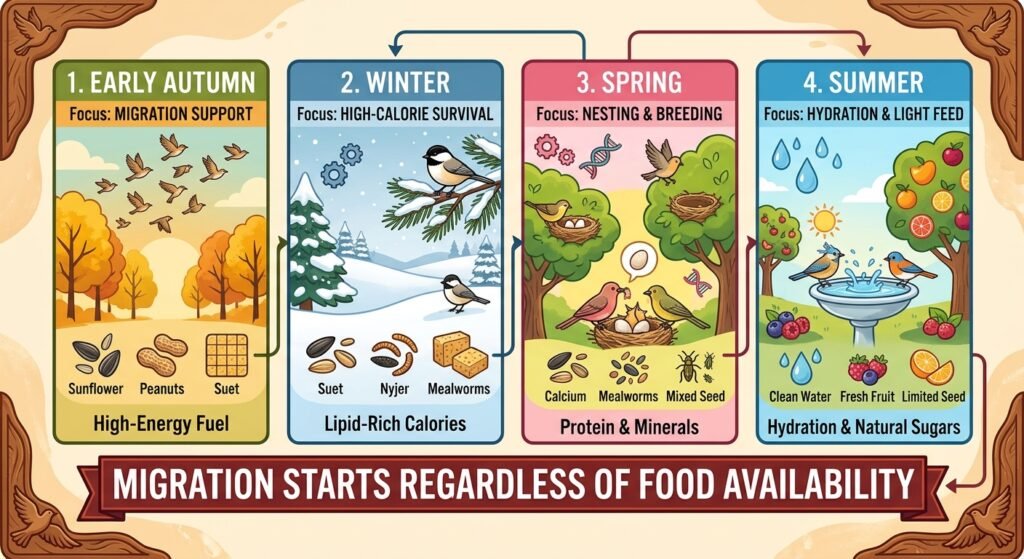
To run an efficient, safe, and highly active feeding station year-round, it is essential to align your food offerings with the changing biological demands of local wildlife. A bird’s dietary needs shift dramatically as it transitions from autumn migration and winter survival to spring breeding and summer molting.
Below is a detailed seasonal breakdown outlining what to offer, why it works, and the nutritional focus required for each part of the year.
Seasonal Feeding & Nutritional Guide
| Season | Primary Focus | Nutritional Needs | Recommended Food Types | Key Avian Target Group |
|---|---|---|---|---|
| Early Autumn (Sept–Oct) | Migration support & territory scouting | High-fat, high-protein energy fuel | Black oil sunflower seeds, shelled peanuts, high-quality beef suet | Migrating songbirds, wintering chickadees & nuthatches |
| Winter (Nov–Feb) | Thermoregulation & survival fuel | Dense lipids, high-calorie fats, quick carbohydrates | Rendered suet blocks, nyjer (thistle) seed, dried mealworms, cracked corn | Resident finches, woodpeckers, cardinals, juncos & sparrows |
| Spring (March–May) | Nesting, egg production & feather growth | Calcium, high-protein energy | Calcium-fortified dried/live mealworms, sunflower hearts, mealworm-infused suet | Breeding pairs, nesting songbirds, early return migrants |
| Summer (June–Aug) | Nestling growth, hydration & molting | Clean water, natural sugars, easily digestible protein | Fresh water stations, fresh fruit slices (oranges, apples), nectar, limited seeds | Fledglings, orioles, tanagers, hummingbirds |
Detailed Breakdown by Season
Early Autumn (September – October): Migration & Scouting
- Biological Context: Millions of songbirds are either navigating thousands of miles along migratory flyways or establishing winter territories. Birds undergo hyperphagia—a period of intense feeding to build up fat reserves before cold weather sets in.
- Nutritional Priority: High-fat lipids and proteins.
- Best Foods:
- Black Oil Sunflower Seeds: The gold standard of bird feeding. Their thin shells are easy to crack, and their meat contains nearly 40% fat and 20% protein.
- Shelled Peanuts: Rich in essential fatty acids and protein, ideal for blue jays, nuthatches, and woodpeckers storing food caches.
- Suet Blocks: High-density calories that provide immediate energy during cooler autumn nights.
Winter (November – February): Thermoregulation & Cold Survival
- Biological Context: Winter is a battle against hypothermia. A small bird like a chickadee can lose up to 10% of its body weight overnight just maintaining a core body temperature near 104°F (40°C).
- Nutritional Priority: Dense, rapidly metabolized calories and fats.
- Best Foods:
- Rendered Beef Suet: Pure animal fat provides concentrated energy that digests quickly without requiring excess metabolic effort.
- Nyjer (Thistle) Seed: Tiny, oil-rich seeds that are favored by goldfinches, siskins, and redpolls.
- Mealworms & Sunflower Hearts: Quick, shell-free calories that allow birds to feed fast and minimize exposure to cold winds and predators.
Spring (March – May): Nesting & Calcium Demands
- Biological Context: Spring brings territorial displays, egg-laying, and chick rearing. Female birds experience immense calcium depletion while forming eggshells, while parent birds require massive amounts of protein to feed growing nestlings.
- Nutritional Priority: Protein and essential minerals (especially calcium).
- Best Foods:
- Calcium-Fortified Mealworms: Live or dried mealworms supply crucial protein for developing chicks. Crushed, sterilized eggshells can also be offered to replenish calcium in breeding females.
- Hulled Sunflower Chips: Shell-free seeds prevent waste accumulation around nest sites and reduce bacterial growth near vulnerable chicks.
Summer (June – August): Hydration, Fledglings & Molting
- Biological Context: Natural foods (insects, berries, wild seeds) are abundant in summer. However, high temperatures make clean water essential, and fledglings need accessible protein sources while learning to forage independently. Late summer also brings molting, a energy-intensive process of replacing worn feathers.
- Nutritional Priority: Hydration, natural sugars, and clean maintenance food.
- Best Foods:
- Fresh Water Stations: A clean birdbath or water mister is far more attractive to birds in mid-summer than seed feeders.
- Fresh Fruit & Nectar: Halved oranges and grape jelly attract orioles and tanagers, while sugar water (4:1 water-to-sugar ratio) supports high-metabolism hummingbirds.
- Light Seed Offerings: Reduce heavy suet (which can melt and spoil in high heat) in favor of small amounts of dry sunflower seeds.
4. Choosing the Right Starter Equipment
Getting your timing right is only half the equation—choosing a safe, durable, and well-designed feeder is equally important. The type of feeder you install determines not only which bird species will visit your yard, but also how easy it will be to maintain hygiene and enjoy clear, unobstructed observations.
If you are starting or upgrading your backyard feeding station this season, here is what you need to know about selecting the right equipment.
The Main Types of Starter Feeders (With Top Examples)
When setting up a new feeding station, birdwatchers typically choose among three primary feeder designs, depending on their space, target species, and viewing goals:
1. Window-Mounted Feeders (Intimate, Eye-Level Observation)
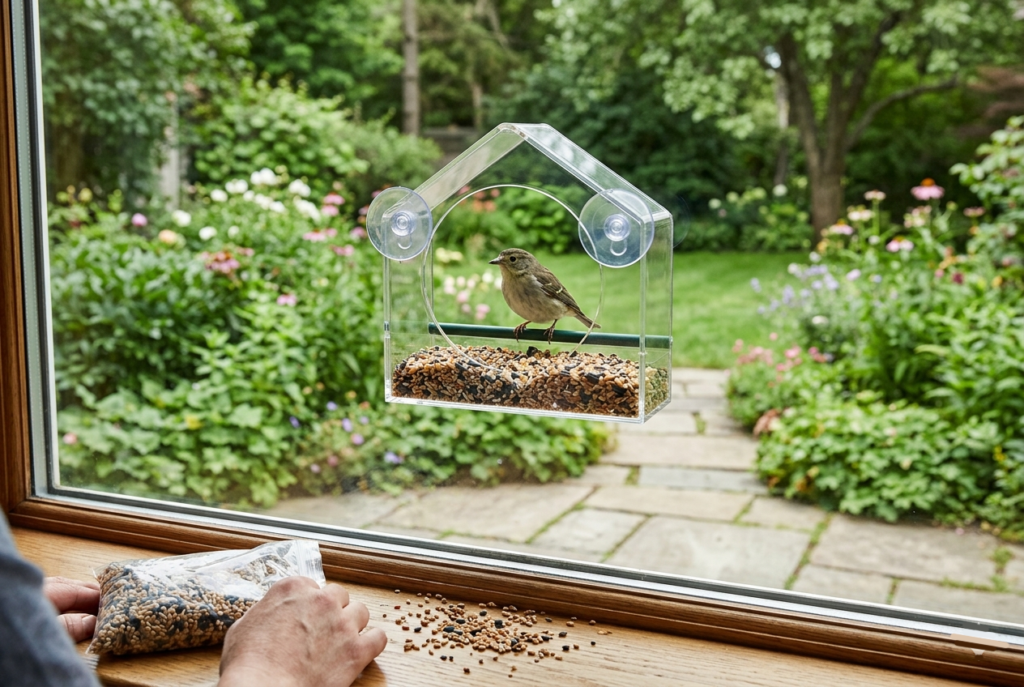
Window-Mounted Feeders attach directly to exterior glass panes using heavy-duty suction cups, offering an intimate, eye-level observation experience. They are especially ideal for homes, home offices, apartments, and balconies where yard space is limited or where cats and ground predators pose a constant threat. Beyond eliminating dangerous high-velocity window collisions, clear acrylic models bring wild birds just inches away from your desk. A prime example of this design is the BirdClose Clear Window Feeder, which features ultra-transparent acrylic, industrial-grade suction mounts, and a clever slide-out tray with drainage slots for effortless cleaning. Another popular all-weather option is the Nature’s Hangout Window Feeder, which utilizes a deep multi-compartment tray for seeds and mealworms.
2. Hopper Feeders (Capacity, Durability & Multi-Bird Perches)
Hopper Feeders are traditional house-shaped structures crafted from wood, heavy-duty plastic, or metal that hold generous amounts of seed, protecting it from rain and snow. As birds feed from the bottom tray, gravity automatically dispenses fresh seed from the central reservoir. Because they accommodate multiple perching birds at once, they attract a wide variety of species, including larger songbirds like northern cardinals, blue jays, and grosbeaks. A standout example in this category is the Kingsyard Heavy Duty Recycled Plastic Hopper Feeder, widely recognized for its eco-friendly poly-lumber construction that refuses to crack, rot, or fade in severe autumn weather while featuring built-in side suet cages. For those who prefer a timeless aesthetic, classic cedar models like the Woodlink Wooden Ranch Feeder offer a natural look while keeping seed dry under a protective roof.
3. Tube Feeders (Clinging Specialists & Pest Control)
Tube Feeders consist of vertical, clear cylinders surrounded by multiple feeding ports and perches. Engineered specifically to dispense smaller seeds—such as black oil sunflower seeds or nyjer—they allow agile clingers like finches, chickadees, titmice, and siskins to feed freely while deterring larger bully birds. Models like the Kingsyard Metal Tube Feeder incorporate sturdy metal perches and lids to resist squirrel damage and withstand heavy autumn storms. Similarly, the Droll Yankees Classic Tube Feeder remains a gold standard among birders due to its UV-stabilized polycarbonate tube and durable metal seed guards.
Key Features to Look For in a Quality Feeder
Before purchasing your first feeder, ensure it includes these essential design elements:
- Smart Drainage & Ventilation: Standing water causes seed to mold quickly, creating a breeding ground for harmful bacteria (such as Salmonella). Look for built-in drainage holes or dual-compartment trays that keep seed completely dry.
- All-Weather Durability: Cold winds, autumn rain, and harsh winter frost can weaken cheap plastics. Choose heavy-duty, weather-resistant acrylic or metal construction.
- Easy Cleaning Access: Feeders require regular sanitation. Removable seed trays or magnetic slide-out trays make cleaning effortless without needing to unmount the entire unit.
- Predator & Collision Protection: Window-mounted models significantly reduce dangerous window strikes by breaking up glass reflections and preventing birds from building up high flight speeds toward the window.
Recommended Pick: Premium Window Feeders
For an exceptionally clear, up-close viewing experience, I always recommend looking into BirdClose—they make outstanding window feeders that I’ve found to be a total game-changer for both long-time birders and complete beginners. What really sets them apart in my eyes is the sheer quality of the build: crafted from ultra-transparent, crystal-clear acrylic and backed by industrial-grade suction mounts, these feeders stay rock-solid against heavy autumn winds and seasonal rainstorms without slipping.
I especially appreciate their models with smart drainage channels that keep seed completely dry after a downpour, while the clear frame lets you observe those beautiful, intimate moments—from seed cracking to social hierarchy—of chickadees, finches, nuthatches, and cardinals right from your desk or living room window.
To help you skip the frustration of an empty feeder and attract your very first feathered visitors fast, every unit comes with a free 7-day roadmap packed with step-by-step placement tactics, seed recommendations, and practical setup tips. In my view, if you want a seamless way to combine reliable outdoor equipment with unforgettable front-row views of nature, a quality window feeder from BirdClose is one of the best investments you can make for your autumn setup.
5. Best Practices for Starting Your Feeding Station
Setting up your feeders at the right time and with quality equipment lays the foundation for success, but ongoing maintenance is what keeps wild birds healthy, safe, and returning to your yard year after year.
Because wild birds congregate in higher densities around artificial feeding sites than they ever would in nature, backyard birders bear a fundamental responsibility to maintain a clean and safe environment. To ensure your station remains a safe haven rather than a hazard, follow these evidence-based best practices from day one:
1. Maintain Strict Feeder Hygiene (Disease Prevention)
Damp seed, accumulated droppings, and moldy debris are prime breeding grounds for avian pathogens, including Salmonella enterica, Trichomonas gallinae, and Mycoplasmal conjunctivitis. These diseases spread rapidly when infected birds contact contaminated perches or food trays.
- Cleaning Routine: Disassemble and scrub seed trays, tube feeders, and window units every 1 to 2 weeks (or more frequently during wet, rainy spells).
- Sanitization Protocol: Wash all parts in warm, soapy water, then soak them in a 10% dilutive bleach solution (1 part household bleach to 9 parts water) for 10–15 minutes. Rinse thoroughly with clean water and allow every component to air-dry completely before refilling, as moisture trapped in a feeder quickly triggers mold growth.
- Ground Care: Regularly rake or sweep under your feeding station to clear away fallen hulls and discarded seeds, preventing ground-foraging rodents and damp rot.
2. Provide a Clean, Year-Round Water Source
Food attracts birds, but clean water makes your yard an irresistible sanctuary. Birds require water every single day for two critical reasons: hydration and feather maintenance (preening). Clean, well-aligned feathers are essential for insulating birds against winter cold and ensuring efficient flight when evading predators.
- Birdbath Placement: Position a shallow water basin (1 to 2 inches deep) within 10–15 feet of your feeding station.
- Maintain Motion: Adding a solar water fountain or drip system creates ripples and splashing sounds that attract passing migrants from high above.
- Winter Strategy: During freezing weather, use a thermostatically controlled heated birdbath or an immersion heater to provide open liquid water when natural ponds and puddles freeze over.
3. Smart Placement to Prevent Fatal Window Collisions
Glass reflections present one of the leading human-caused threats to wild birds, causing hundreds of millions of avian fatalities annually. Birds perceive glass reflections of trees and sky as open air and fly into them at full speed.
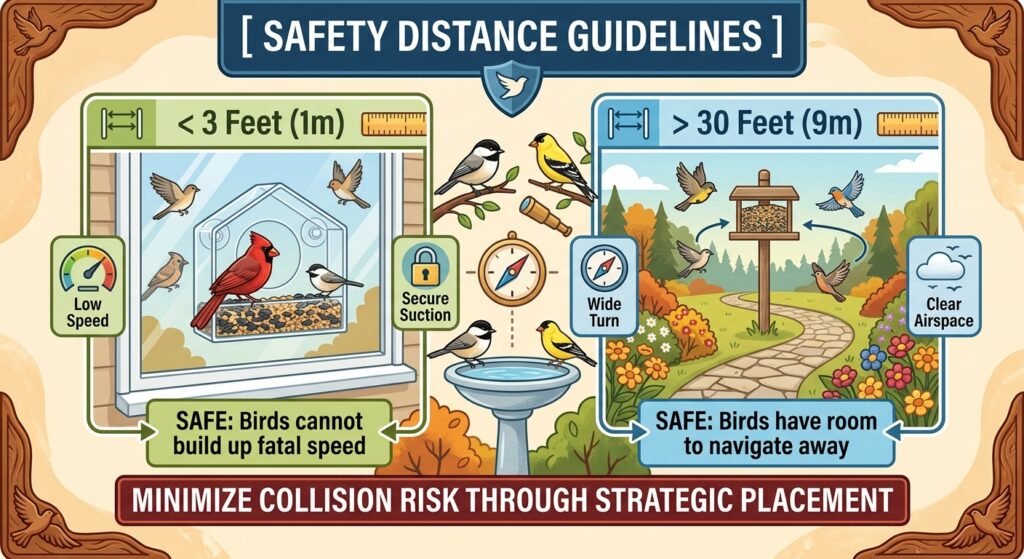
- The 3-Foot / 30-Foot Rule:
- Within 3 feet (1 meter): Place feeders directly on or right next to the window pane. Even if a bird is startled and flies toward the glass, it cannot build up enough velocity to sustain a fatal impact. Window-mounted acrylic models (such as those from BirdClose) excel here by breaking up reflections entirely.
- Beyond 30 feet (9 meters): Place pole-mounted or hanging feeders far out in the yard, giving birds enough airspace to recognize the glass and maneuver away if spooked.
- The Danger Zone (3 to 30 feet): Avoid placing feeders in this middle zone, as it gives birds just enough distance to reach high flight speeds right before hitting the glass.
4. Implement Strategic Pest & Predator Protection
An active feeding station quickly catches the eye of local predators—particularly domestic cats—as well as agile nest-robbers and squirrels.
- Cat Mitigation: Free-roaming and domestic cats are the single largest source of direct human-caused mortality for wild birds. Keep indoor cats inside, and place ground feeders or low perches at least 10–12 feet away from low bushes where cats can hide and pounce.
- Squirrel Baffles: If using a traditional pole setup, install a smooth, dark metal or plastic torpedo-style squirrel baffle at least 4–5 feet off the ground, ensuring the pole is placed at least 10 feet away from overhanging tree branches or rooflines that squirrels can leap from.
- Feeder Design Choice: Utilizing window-mounted acrylic feeders on high, smooth glass panes inherently deters non-climbing pests while keeping birds well above ground-level predators.
Summary: Ready for the Season?
If you have been waiting for the right moment to hang your feeders, the answer is simple: early autumn is the absolute best time to start.
By establishing your feeding station before the first hard freeze, you provide passing migrants with high-energy fuel and give resident birds the opportunity to map your yard as a trusted winter food source. Far from disrupting natural behaviors or halting migration, thoughtful autumn feeding empowers wild birds to build vital fat reserves, maintain healthy feather insulation, and survive the cold months ahead.
Setting up a thriving backyard sanctuary does not require complex equipment—just a commitment to regular feeder hygiene, fresh water availability, and strategic feeder placement to prevent window collisions. It is not matter which type of bird feeder you choose, watching the seasonal transition of songbirds right outside your glass is one of the most rewarding experiences in birdwatching.
Take Action This Season
Looking to elevate your view and bring nature closer to home?
Explore BirdClose.com for ultra-transparent window bird feeders, heavy-duty suction mounts, and complete starter setups designed specifically for birding enthusiasts. Every feeder comes with their free 7-day roadmap, giving you step-by-step guidance on optimal seed placement, feeder care, and quick species attraction strategies to ensure your station becomes a vibrant hub of bird activity from day one.
Grab your morning coffee, set up your station, and enjoy a front-row seat to the wonders of avian life this season!
Affiliate Disclosure: Some of the links on this page are affiliate links. This means that at no additional cost to you, I may earn a commission if you click through and make a purchase. I only recommend products and equipment I truly trust.

Lorand Vigh is a nature conservation professional and lifelong birder based in Serbia (Vojvodina). With over 30 years of field experience in birdwatching, habitat protection, and conservation management, he has worked on bird monitoring projects, habitat restoration initiatives, and cross-border conservation cooperation. GoToBirding is a personal project built on real field experience, sharing practical, science-based advice for birders and wildlife photographers.