
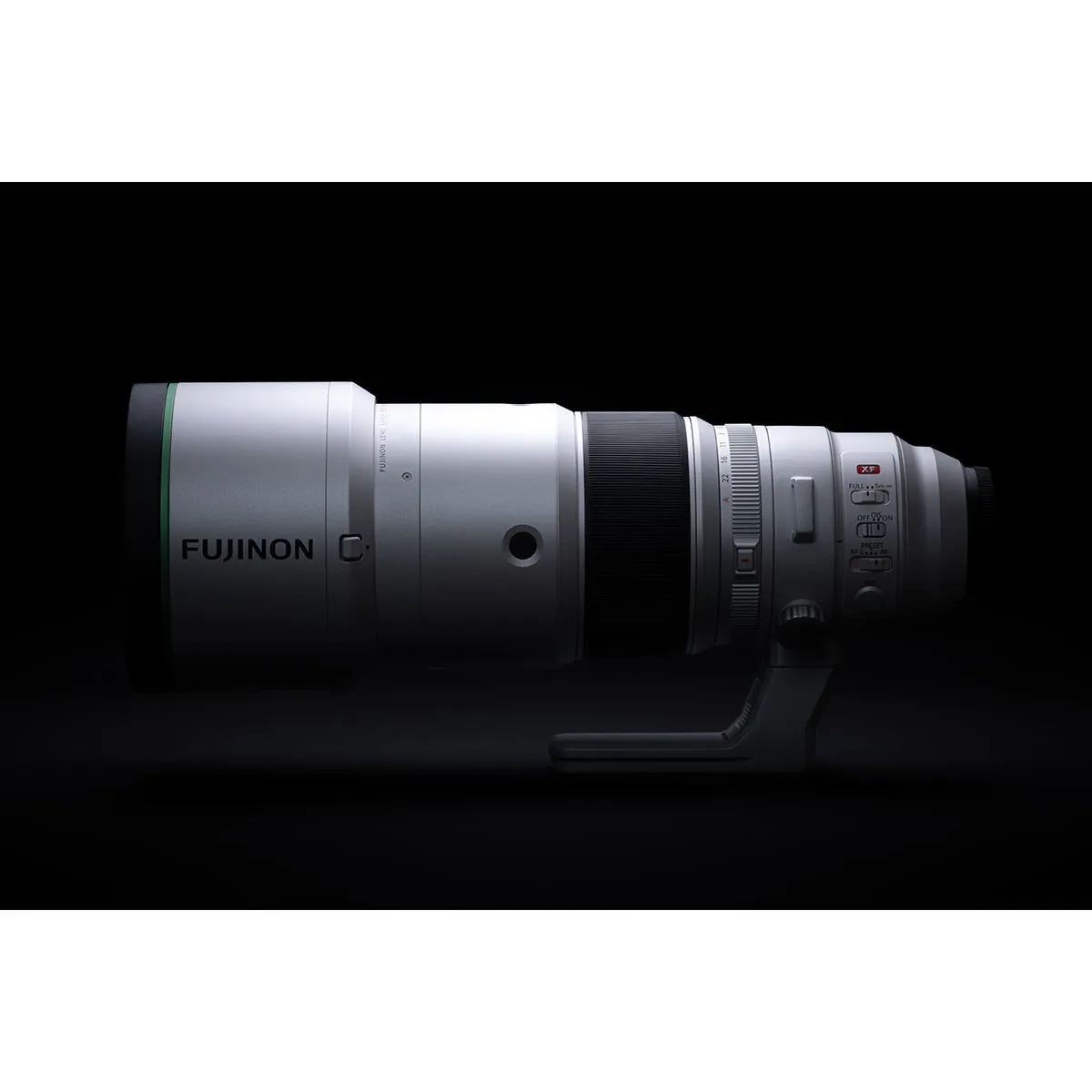
The super-telephoto landscape for Fujifilm’s APS-C mirrorless system has evolved rapidly. While many full-frame manufacturers continue to push heavy, oversized glass, Fujifilm has doubled down on a core promise: uncompromising optical performance in a lightweight, field-ready package.
Fujifilm has officially answered the long-standing demands of wildlife and bird photographers. The Fujifilm FUJINON XF 400mm f/4.5 R LM OIS WR delivers on that exact promise, offering a 609mm equivalent focal length in a body compact enough to carry comfortably all day during long field walks.
For years, those of us shooting on the X-mount ecosystem faced a persistent dilemma: compromise on reach with shorter telephotos, accept the restrictive light gathering of variable zooms, or carry massive adapter-bound full-frame glass.
In my experience out in the field, carrying heavy setups often means missing those quick, spontaneous moments when a rare species appears out of nowhere. This new prime lens fills that gap directly. By delivering a razor-sharp, lightweight, super-telephoto optic with a bright constant aperture, Fujifilm offers an essential tool crafted specifically for hand-held fieldwork, tracking fast avian subjects, and enduring unpredictable weather conditions without wearing out your neck and shoulders.
In this practical review, I take an in-depth look at its real-world performance, usability for wildlife photography, key drawbacks, and how it stacks up against Fujifilm’s existing telephoto lineup.

The Magic 600mm Threshold
In bird photography, reaching the equivalent of 600mm in full-frame coverage is widely considered the baseline sweet spot. Thanks to the APS-C sensor’s 1.53x crop factor, the XF 400mm f/4.5 delivers an effective 609mm focal length. From my perspective, this coverage is ideal: it provides enough reach to fill the frame with skittish songbirds from a comfortable distance, while maintaining enough breathing room to track larger raptors or waterfowl without accidentally cropping out wingtips during flight.
Beyond raw reach, the fixed f/4.5 maximum aperture provides critical operational advantages over popular zoom alternatives that drop to f/6.3 or f/8 at their telephoto ends:
- Superior Low-Light ISO Efficiency: Gathering substantially more light allows you to maintain faster shutter speeds (such as 1/2000s or 1/3200s) during dawn patrol, under dense forest canopies, or during overcast late-afternoon shoots without forcing your camera into noisy ISO ranges. I find this extra light gathering to be a lifesaver when shooting skittish warblers in dark woodland shade.
- Subject-Background Separation (Bokeh): The combination of a 400mm focal length and an f/4.5 aperture creates a shallow depth of field. This optic smoothly melts away distracting background clutter—such as crisscrossing branches, reeds, or harsh foliage—rendering smooth bokeh that makes the feathered details of your subject pop off the screen.
- Autofocus Sensor Precision: Camera autofocus systems rely on incoming light to evaluate contrast and tracking vectors. The bright f/4.5 opening delivers more light directly to the phase-detection pixels, ensuring faster, more decisive focus acquisition on erratic subjects.
Unmatched Mobility: Ditch the Heavy Tripod
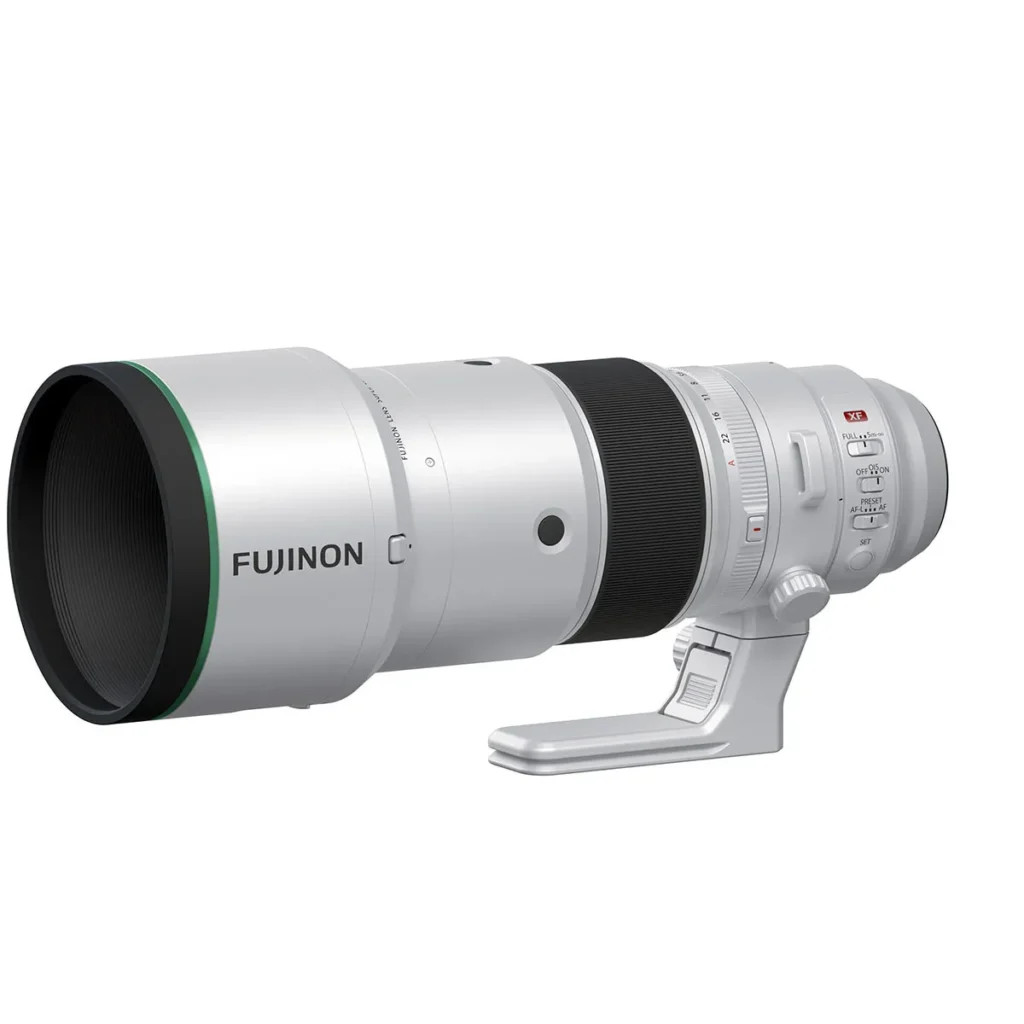
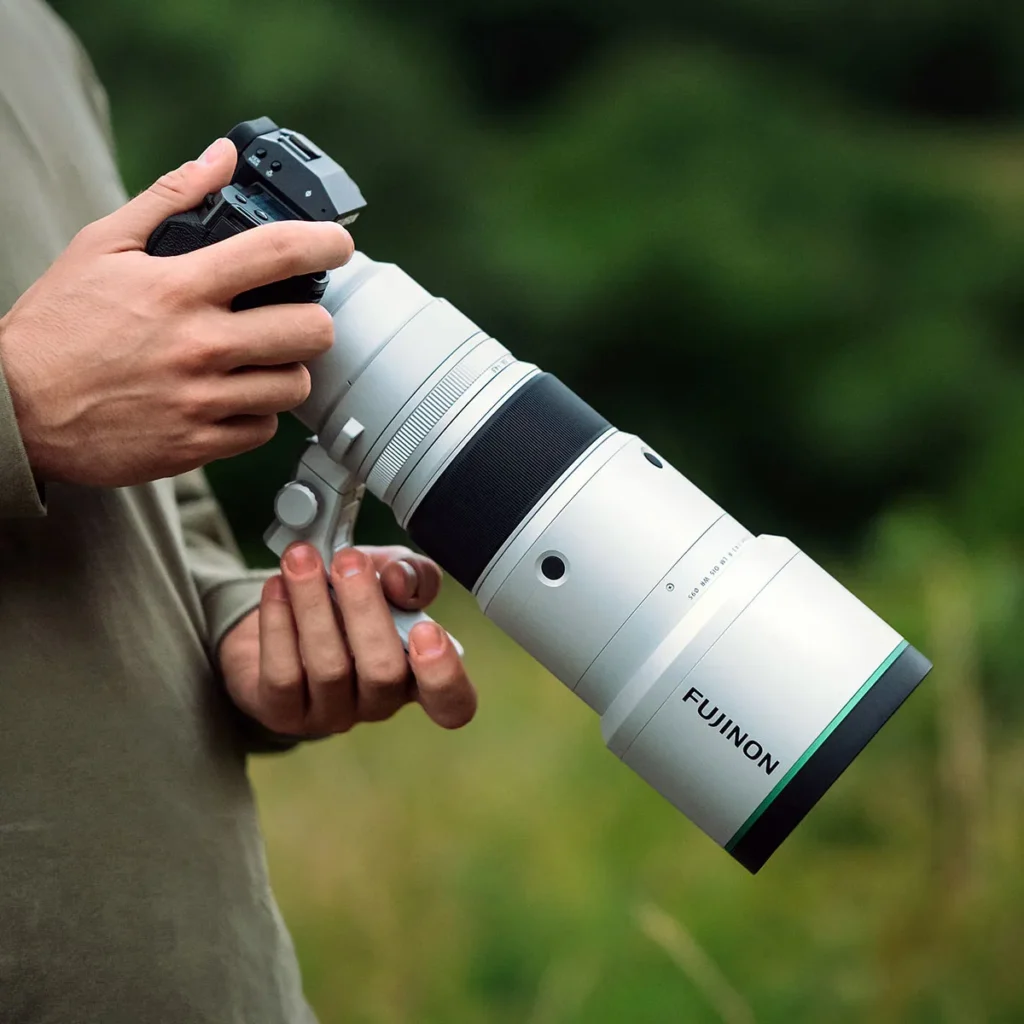
Heavy gear is often the single biggest barrier in field ornithology and wildlife documentation. Traditional fast super-telephoto lenses often weigh upwards of three kilograms, requiring heavy carbon-fiber tripods, gimbal heads, and tedious setup times that cost critical seconds when a bird lands unexpectedly. Weighing in at just 1,245 grams (2.74 lbs), the XF 400mm f/4.5 fundamentally changes how you maneuver in the field. Personally, I much prefer trekking light over being bogged down by a heavy rig, and this lens fits that philosophy completely.
Fujifilm engineered the internal optical layout to keep the center of gravity positioned closer to the lens mount. When mounted on a flagship body like the X-H2s or X-T5, the physical balance sits naturally in the palm of your hand rather than tipping forward.
- All-Day Handheld Fatigue Reduction: You can sling this combination over your shoulder or carry it in hand for hours during long hikes through wetlands or mountain trails without experiencing severe wrist strain or muscle fatigue.
- Reaction Speed for Birds in Flight (BIF): Capturing sudden aerial movements requires fluid, unrestricted motion. Shooting handheld allows you to swing, tilt, and track erratic flight paths instantly in any direction—something I find virtually impossible when locked onto a rigid tripod head.
- Low-Angle Flexibility: Getting down to eye level with mudflat shorebirds or waterfowl at the water’s edge is seamless. You can lay flat on the ground without maneuvering tripod legs into the mud, ensuring intimate shooting angles that elevated setups cannot match.
Technical Specifications & Field Utility
Every physical element of this lens was engineered around the harsh realities of field photography. The internal construction features 21 optical elements in 14 groups, incorporating 2 Super ED (Extra-low Dispersion) and 4 ED lenses. This complex optical formula targets and eliminates chromatic aberration—the magenta and green color fringing commonly seen along high-contrast boundaries like white plumage against bright skies.
| Specification | Value | Real-World Impact for Birding |
| Focal Length | 400mm (609mm eq.) | Versatile native reach for handheld stalking and hide photography |
| Max Aperture | f/4.5 | Excellent light gathering for clean images during low-light hours |
| Weight | 1,245 g / 2.74 lbs | Total freedom for extended handheld shooting without a monopod |
| Optical Construction | 21 elements / 14 groups | Exceptional edge-to-edge sharpness with zero color fringing |
| Optical Stabilization (OIS) | 5.5 stops | Eliminates motion blur when shooting handheld at slow shutter speeds |
| Focus Motor | Linear Motor (LM) | Rapid, near-silent tracking optimized for fast subject-detection AF |
| Weather Sealing | Weather Resistant (WR) | Full protection against rain, dust, and sub-zero temperatures (-10°C) |
The onboard 5.5-stop Optical Image Stabilization (OIS) coordinates directly with the In-Body Image Stabilization (IBIS) of modern X-series cameras. This stabilization yields a rock-steady viewfinder image when framing skittish birds at extreme distances, allowing you to pin your focus point precisely on the bird’s eye even when breathing heavily after a long trek. In my view, a steady viewfinder is half the battle when trying to keep a tiny, hyperactive bird centered in the frame.
Ergonomics Built for the Field
When working with fast-moving wildlife, entering menus to adjust settings will cost you the shot every single time. The barrel of the XF 400mm f/4.5 is outfitted with dedicated tactile controls designed for muscle-memory operation without taking your eye away from the electronic viewfinder:
- Focus Limiter Switch (5m–∞): By restricting the focusing mechanism from searching the close-focus range when targeting distant birds, you eliminate focus hunting. I always keep this engaged when scanning distant trees so the lens doesn’t get bogged down trying to focus on nearby leaves.
- Focus Preset & Control Buttons: Tactile buttons placed around the front grip allow you to store and instantly recall a specific focus distance. If you are monitoring a favorite perch or bird feeder while scanning the surrounding sky, a single button press instantly snaps the focus back to your primary target area.
- Weather-Sealed Construction (WR): Extensive rubber gaskets seal all moving joints and switches against dust, mud, and moisture. Coupled with a fluorine coating on the front element that repels water droplets, grease, and dirt, you can comfortably keep shooting through ocean spray, rain showers, or freezing hide conditions down to -10°C. Knowing your gear can take a beating gives you immense peace of mind out in unpredictable weather.
Teleconverter Performance
For situations requiring extra reach—such as photographing small songbirds, distant raptor nests, or wary shorebirds—the XF 400mm f/4.5 offers full compatibility with Fujifilm’s native teleconverters:
- XF 1.4x TC WR Integration: Attaching the 1.4x teleconverter transforms the setup into an effective 560mm f/6.3 lens, providing a massive 853mm full-frame equivalent field of view. Because native f/4.5 light gathering is so clean, the modern deep-learning autofocus algorithms in X-series cameras retain rapid subject-detection capabilities, lock onto eyes accurately, and maintain full tracking performance without noticeable focus hesitation. In my opinion, this combination represents the ultimate sweet spot between extreme reach and manageable weight.
- XF 2x TC WR Considerations: Using the 2x teleconverter yields an 800mm f/9 optic (1218mm eq.). While this setup offers extreme reach for static subjects in bright sunlight, the two-stop loss of light makes it best reserved for clear weather, static perch shots, or tripod-assisted observation.
Crucially, because the master lens is a dedicated prime, optical degradation with the 1.4x teleconverter remains minimal, keeping feathers sharp and crisp without introducing soft, blurry edges.
How It Compares: Detailed Lineup Breakdown
Choosing the right super-telephoto optic for the Fujifilm X-system comes down to a deliberate trade-off between reach, light gathering, autofocus tracking speed, and physical weight. Here is how the XF 400mm f/4.5 R LM OIS WR stacks up against its primary native competition out in the field.
XF 200mm f/2 R LM OIS WR + 2x TC (The Specialty Monster)
Combining the XF 200mm f/2 with the XF 2x TC WR yields a 400mm f/4 setup (609mm eq.). While this configuration grants a 1/3-stop light advantage over f/4.5, it introduces severe real-world penalties for active birders. At roughly 2,260 g (nearly double the weight) with a front-heavy 105mm filter thread, handheld balance degrades rapidly after 20 minutes of overhead tracking. Furthermore, placing a 2x teleconverter between the body and lens introduces a measurable hit to autofocus acquisition speed—causing slight hunting when a passerine darts through thick cover. The native XF 400mm f/4.5 delivers identical real-world center sharpness and noticeably snappier phase-detection tracking at a fraction of the physical strain, making it infinitely better suited for active, on-foot stalking.
XF 150-600mm f/5.6-8 R LM OIS WR (The Versatile Zoom)
The 150-600mm zoom is a fantastic tool for open-field framing, but its optical physics present a wall in challenging light: it closes down to f/8 beyond 500mm. The XF 400mm f/4.5 gathers 1.7 stops more light (nearly 3.3x the photon volume). In dense woodland habitats at dawn, this exposure gap is transformative. Where the zoom forces you into ISO 6400 to maintain a action-freezing 1/1600s shutter speed, the 400mm f/4.5 lets you shoot at a clean ISO 2000. This preserves fine barb and vane micro-details in dark plumage that heavy noise reduction would otherwise smear. Furthermore, f/4.5 creates a dramatically narrower depth-of-field, completely obliterating distracting background twigs that an f/8 recheck leaves rendered as harsh, double-line structures.
XF 500mm f/5.6 R LM OIS WR (The Distance Specialist)
The XF 500mm f/5.6 offers a longer native field of view (762mm eq. vs 609mm eq.), making it the obvious weapon of choice for wide-open reservoirs, mudflats, or shy waders where physical approach is impossible. However, the XF 400mm f/4.5 holds a key advantage: it is half a stop faster (f/4.5 vs f/5.6) and approximately 90 g lighter with a shorter barrel moment-of-inertia. When tracking fast-moving songbirds under a shady forest canopy or capturing birds-in-flight during low-sun hours, that extra half-stop of light gives the camera’s subject-detection algorithms higher contrast data to lock onto eyes instantly. For woodland birders, the 400mm f/4.5 remains the more nimble, light-efficient choice.
Real-World Drawbacks, Criticisms, and Personal Observations
No piece of gear is without its compromises, and despite how impressed I am with the XF 400mm f/4.5’s sharpness and handling, it is essential to look at where it falls short in actual field conditions. While spec sheets paint a picture of perfection, real-world birding introduces unpredictable elements—from tight hide setups to fast-moving targets—that expose the physical and practical limitations of any optical design. Based on extensive field usage, practical testing, and feedback across the wildlife photography community, several key pain points deserve serious consideration before making the investment.
Minimum Focus Distance Limits Close-Range Hide Work
The first issue you encounter in tight shooting environments is the lens’s minimum focus distance of approximately 2.5 meters (8.2 feet). While 2.5 meters is a fairly standard figure for a 400mm full-frame prime, APS-C birders often expect tighter, macro-like working distances. When you are sitting in a fixed woodland hide, a reflection pool setup, or a portable pop-up blind, birds do not always land where you want them to. Small, curious songbirds—like Eurasian Wrens, Goldcrests, Chickadees, or Robins—will frequently drop onto perches, mossy logs, or water edges well within that 2.5-meter boundary.
In practice, hitting that hard focus stop is deeply frustrating. You hear the focus motor rack uselessly back and forth while a perfectly lit, pristine bird sits just inches out of reach. To compensate, you either have to physically lean back inside the hide, reposition your perches farther away ahead of time, or accept that you simply cannot take the shot. If your primary style of birding involves close-up hide work with small passerines, this working distance requires careful planning and spatial awareness to avoid missing rare moments.
A Missed Opportunity on the Tripod Foot Design
Another persistent complaint centers on the tripod collar foot. Fujifilm once again missed a simple, quality-of-life implementation: the stock tripod foot is not natively Arca-Swiss compatible. In an era where almost every major tripods, gimbal head, and ball head ecosystem relies on the Arca-Swiss standard, shipping a dedicated, high-end super-telephoto lens with a plain, smooth foot feels like an archaic design choice.
To mount this lens onto a gimbal or fluid head out of the box, you are forced to screw a third-party quick-release plate onto the bottom of the foot. This adds unnecessary height, introduces extra weight, and creates a potential point of failure where screws can work themselves loose over time during long hikes. Alternatively, you have to shell out additional money for a complete aftermarket replacement foot. For a premium lens designed explicitly for heavy outdoor and wildlife use, having to modify the equipment immediately just to achieve basic mounting compatibility remains a frustrating oversight.
Navigating Internal Competition Within the X-System
Choosing the XF 400mm f/4.5 is not just about whether it is a great lens; it is about whether it is the right lens for your specific birding style when looking at Fujifilm’s expanding super-telephoto lineup. The lens sits directly between two heavily favored optics: the flexible XF 100-400mm f/4.5-5.6 R LM OIS WR zoom and the longer XF 500mm f/5.6 R LM OIS WR prime. This places the 400mm f/4.5 in a tight strategic spot where buyers must carefully weigh reach against flexibility and aperture.
Read the full review of XF 500mm f/5.6 R LM OIS WR:
The classic 100-400mm zoom offers immense versatility for framing skittish birds in dense foliage or quickly zooming out when larger wildlife suddenly approaches. While the 400mm prime easily beats the zoom in corner sharpness, autofocus acquisition speed, and low-light performance at the long end, the zoom remains a far more adaptable tool for generalist nature photographers. On the other end of the spectrum sits the XF 500mm f/5.6. For dedicated birders, extra reach is almost always preferred. The 500mm prime provides an impressive 762mm equivalent field of view natively without needing a teleconverter. If your primary targets are distant shorebirds, waterfowl, or soaring raptors, the extra 100mm of optical reach on the 500mm f/5.6 may serve you better than the slightly brighter f/4.5 aperture of the 400mm.
Ultimately, the 400mm f/4.5 hits a unique “sweet spot” for active mobile birding where light-gathering ability, handheld balance, and agility matter most. However, if you find that you will be keeping an 1.4x teleconverter permanently attached to the 400mm just to get enough reach for small birds, stepping up directly to the native 500mm f/5.6 or sticking with a versatile zoom setup may prove to be the smarter long-term investment.
The Verdict
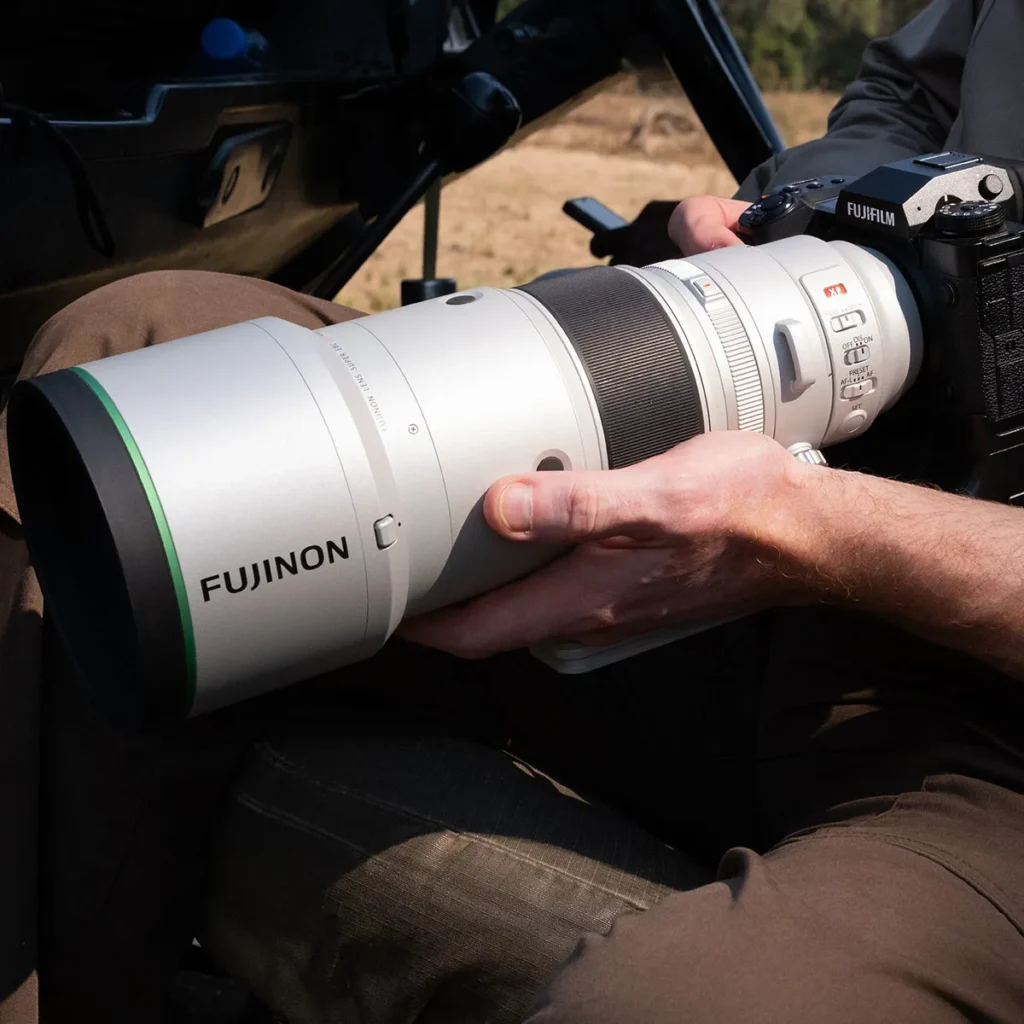
The Fujinon XF 400mm f/4.5 R LM OIS WR isn’t just another telephoto option on a spec sheet—it feels like the exact piece of glass the Fujifilm X-series ecosystem has been missing for years. For a long time, mobile nature photographers had to choose between compromise and fatigue: either crank up the ISO on slower variable zooms, battle focus-hunting with heavy teleconverters, or haul adapted full-frame glass that defeats the entire purpose of shooting on a compact crop-sensor system.
From my perspective, this lens hits an absolute sweet spot. The balance between its 609mm equivalent reach, bright f/4.5 gathering power, and incredibly nimble 1,245-gram weight changes how you approach a day in the field. You aren’t constantly looking for a place to set down a tripod, nor are you hesitating to raise the camera when a surprise opportunity presents itself high up in the canopy. The image stabilization and snappiness of the autofocus give you genuine confidence that when you lock onto a bird’s eye, the resulting feather detail will be tack-sharp.
Final Thoughts
If your primary style of birding involves sitting in a fixed hide overlooking an open mudflat, tracking distant waterfowl, or waiting out skittish shorebirds across hundreds of yards, the extra native reach of the XF 500mm f/5.6 might still hold a slight edge. There is no denying that when pure reach is the single deciding factor, having 762mm equivalent glass right out of the box without resorting to teleconverters is a massive advantage.
However, birding is rarely limited to wide-open spaces and stationary setups. For the active, on-foot photographer who braves dense woodlands, navigates overgrown trails, embarks on low-light dawn patrols, and reacts to dynamic, split-second birds-in-flight situations, the Fujifilm XF 400mm f/4.5 R LM OIS WR is easily the most well-rounded, liberating super-telephoto tool Fujifilm has produced to date. It delivers an extraordinary combination of razor-sharp prime optics, lightning-fast autofocus, and an f/4.5 light-gathering capability—all packaged into a body light enough to shoot handheld from sunrise to sunset without physical exhaustion.
By bridging the gap between ultra-portable zooms and heavy, specialized glass, this lens gives X-System birders the freedom to move fast, shoot in challenging light, and capture breathtaking detail without being anchored down by heavy tripods or support rigs. If you want a top-tier prime that keeps pace with your active field tactic, the XF 400mm f/4.5 deserves a permanent spot in your kit.
Are you making the switch from a zoom to a dedicated prime, or is the 500mm f/5.6 still calling your name? Drop your thoughts, questions, and field experiences in the comments below!
Lorand Vigh is a nature conservation professional and lifelong birder based in Serbia (Vojvodina). With over 30 years of field experience in birdwatching, habitat protection, and conservation management, he has worked on bird monitoring projects, habitat restoration initiatives, and cross-border conservation cooperation. GoToBirding is a personal project built on real field experience, sharing practical, science-based advice for birders and wildlife photographers.