
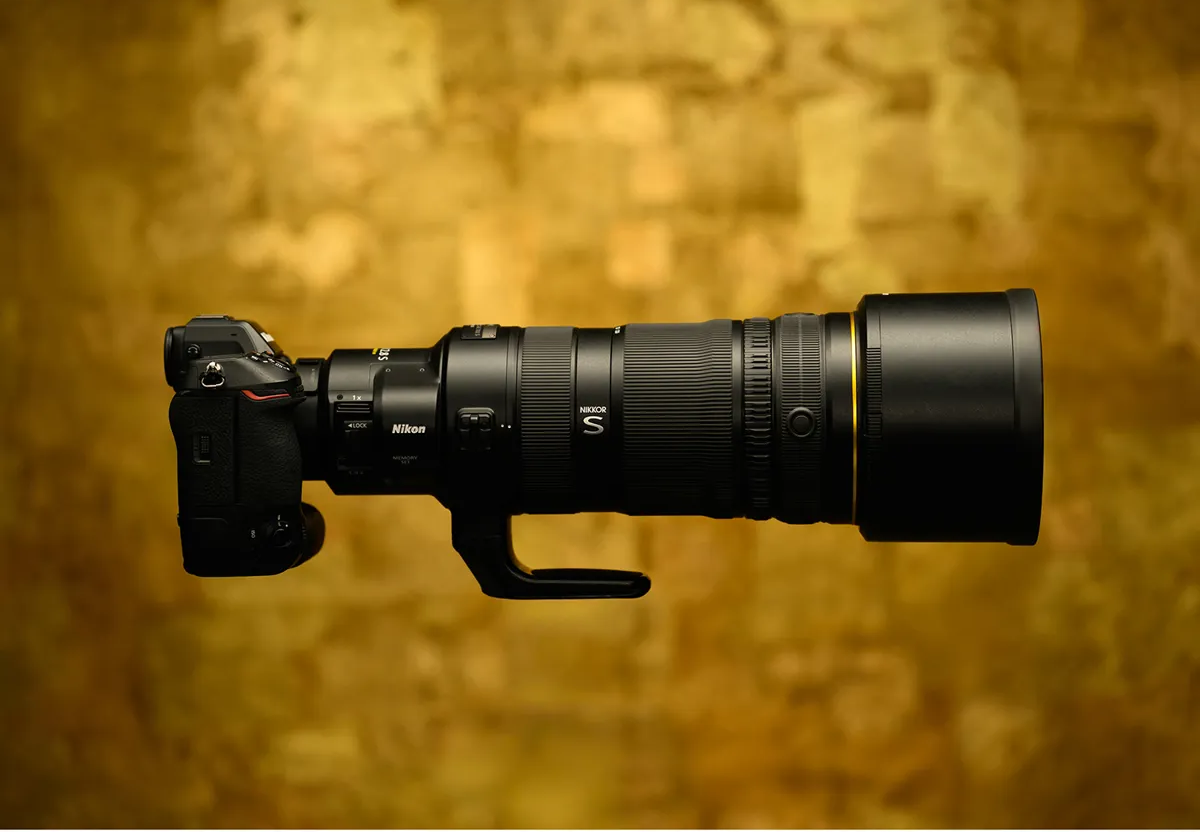
Field observation and wildlife photography demand absolute preparedness. Every nature photographer knows the deep frustration of watching a rare bird land closer than expected while a heavy prime lens restricts framing, or conversely, struggling to reach a distant subject with an inadequate zoom range.
The newly released NIKKOR Z 120-300mm f/2.8 TC VR S addresses this exact dilemma. By combining a fast constant aperture with versatile focal adjustments, this professional-grade optic redefines what is possible when tracking elusive wildlife in challenging outdoor environments.
I haven’t tested this specific glass in the field myself yet. However, analyzing its technical release, lab tests, and initial user feedback gives us a clear picture. Let’s break down what this high-end lens brings to nature photography.
1. Evolution from Legacy F-Mount Models: What Has Changed?
The transition from DSLR optics to the mirrorless Z-mount system represents a generational leap in optical design and mechanical integration. Understanding where this lens comes from highlights the magnitude of Nikon’s engineering achievement. Legacy F-mount fast telephoto zooms, while optically impressive for their time, suffered from inherent physical and mechanical limitations that mirrorless architecture has finally overcome.
Previous generations of fast telephoto zoom lenses often suffered from corner softness and noticeable chromatic aberration when external teleconverters were attached. The new Z-version integrates the 1.4x teleconverter directly into the optical formula, ensuring zero degradation in clarity, contrast, or weather sealing.
Furthermore, older F-mount telephoto zooms were notoriously front-heavy, causing significant muscle strain during prolonged tracking sessions. The internal weight distribution of the Z-series architecture brings the center of gravity much closer to the camera body, dramatically reducing leverage fatigue during extended periods of handheld or monopod tracking.
Finally, the communication speed between the lens CPU and modern mirrorless bodies like the Z9 or Z8 is exponentially faster. This allows the autofocus and vibration reduction systems to synchronize with unprecedented precision, processing spatial data hundreds of times per second to keep up with erratic subjects.
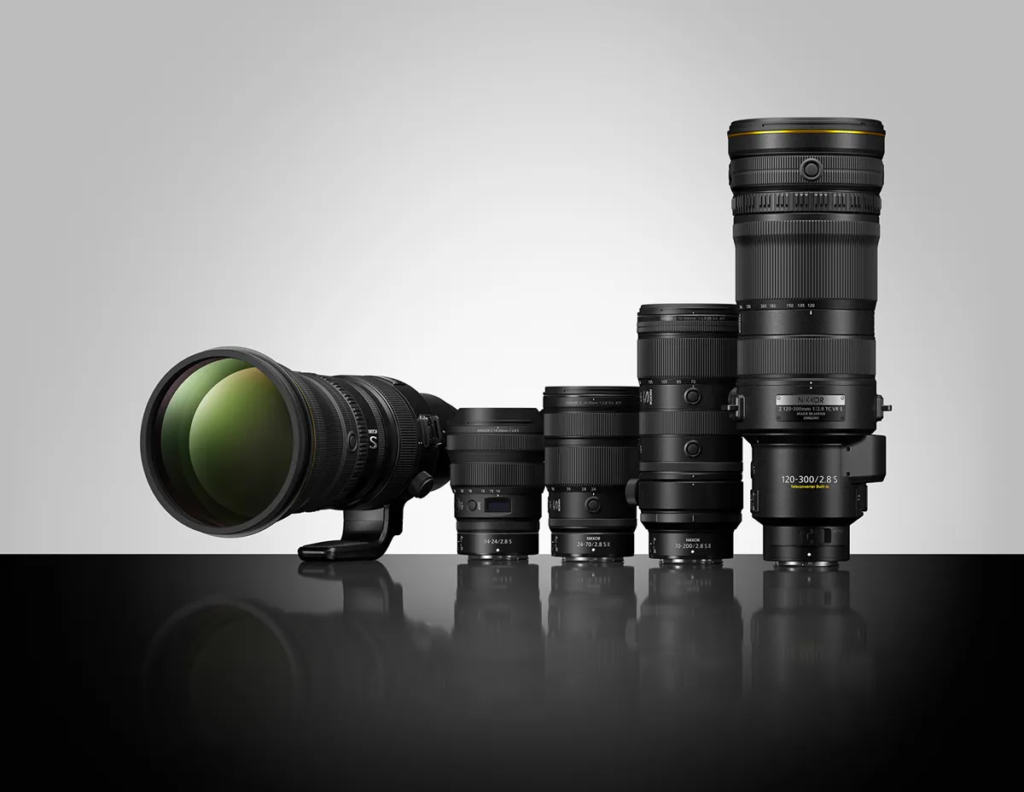
2. Core Engineering and Integrated Innovations
The Nikon S-Line flagship engineering represents a massive leap forward, introducing advanced features tailored specifically for demanding field conditions and hostile environments.
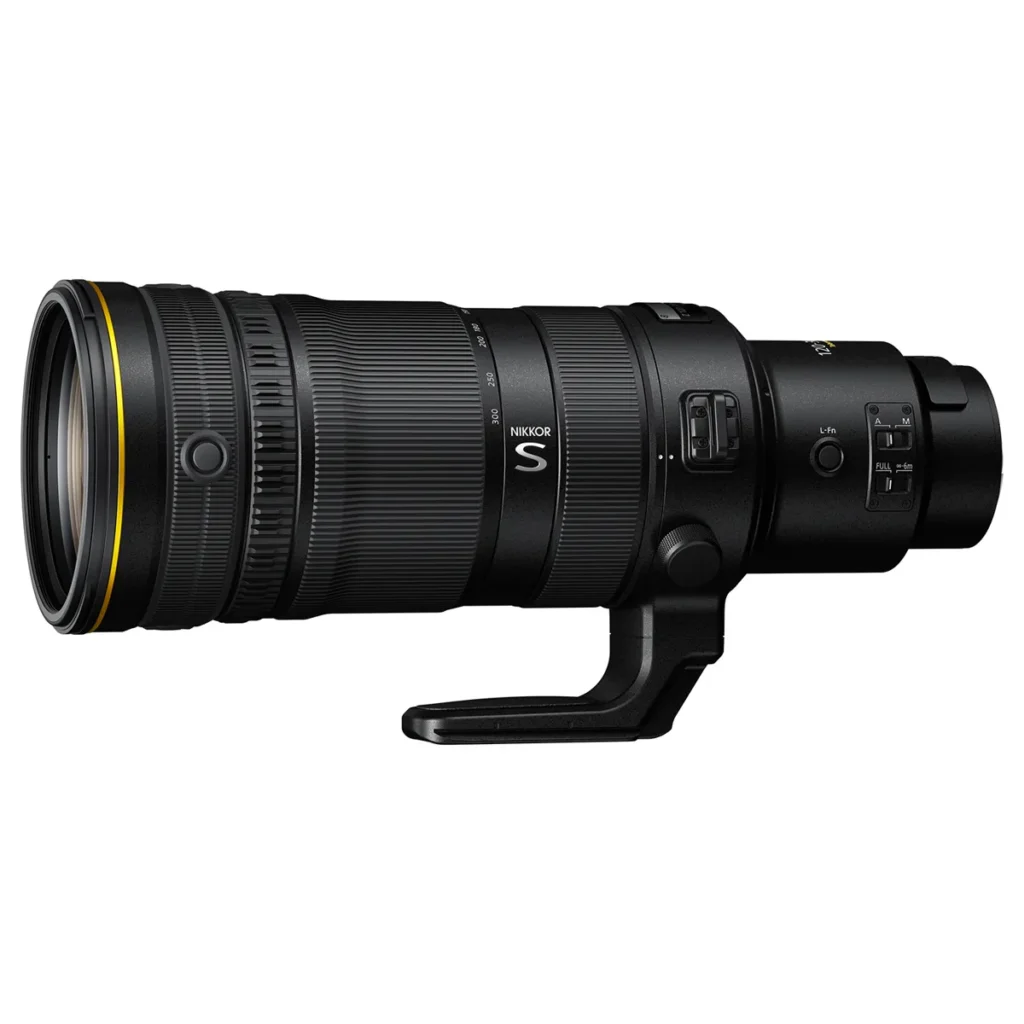
- Built-In 1.4x Teleconverter: This milestone design integrates a 1.4x converter directly into the optical barrel. A simple switch instantly shifts the reach from 120–300mm f/2.8 to a 168–420mm f/4 range without detaching the lens or exposing internal elements to dust and moisture.
- Silky Swift VCM (SSVCM) Autofocus: Utilizing advanced magnetic drive actuators combined with a guide mechanism, the focusing system delivers lightning-fast, highly accurate, and virtually silent subject tracking for erratic avian movements.
- Advanced Optical Coatings: The complex internal layout of 30 elements in 24 groups features Super ED, ED, SR, and Aspherical glasses, complemented by Meso Amorphous Coat and ARNEO technologies to eliminate ghosting and flare under harsh backlighting.
- Enhanced Stabilization and Dual Filters: Delivering up to 6.5 stops of stabilization via Synchro VR, the lens also accommodates both 112mm front screw-in filters and 46mm drop-in rear filters simultaneously for maximum creative control.
3. Advanced Optical and Mechanical Improvements in the Z-Series
Beyond standard specification bumps, several groundbreaking design choices set this lens apart from anything else currently available on the market. These mechanical refinements specifically target the pain points that wildlife photographers encounter during long, grueling expeditions.
For hybrid shooters capturing both stills and video documentation of wildlife behavior, focus breathing has been entirely suppressed. This ensures framing remains completely consistent when rack-focusing between subjects at different distances, preserving natural composition during high-definition video capture.
Environmental protection has also been elevated to extreme standards. Gaskets placed meticulously across every moving joint, combined with a front fluorine coating that repels water, oil, and dust, ensure that torrential rain, ocean spray, or blowing sand during coastal birding expeditions will not halt operations or endanger internal components.
The barrel itself is constructed from a high-grade magnesium alloy, offering extreme durability against physical impacts while maintaining a manageable overall weight profile for professional field use.
4. Comprehensive Analysis of Initial Reviews, Industry Critiques, and Field Testimonials
As hands-on reports and early lab tests trickle in from industry analysts, wildlife reviewers, and field testers, a clear picture emerges regarding how this optic performs under real-world pressure. The consensus across global photography platforms indicates that Nikon has set a new benchmark for fast telephoto zooms.
Key Field Observations and Tester Insights
Reviewers across major outlets emphasize that resolution remains exceptionally high at f/2.8 across the entire focal range. Crucially, engaging the built-in 1.4x teleconverter incurs almost no observable loss in sharpness or contrast. Testers note that edge-to-edge resolution stays crisp even when shooting wide open, effectively giving photographers two prime-quality lenses in a single housing.
Field testers tracking fast-flying waterfowl against complex, noisy backgrounds report that the Silky Swift VCM motor locks onto subjects instantaneously. When paired with 3D tracking and subject detection on modern Z-mount vanguards, the lens maintains acquisition seamlessly even when birds dart through dense branches, reeds, or heavy snowfall.
The 9-blade circular aperture combined with specialized ED element placement produces exceptionally smooth, creamy background blur. Photographers highlighting small perching birds report clean specular highlights and zero onion-ring artifacts, creating beautiful, cinematic separation from busy background foliage.
Handling, Controls, and Real-World Ergonomics
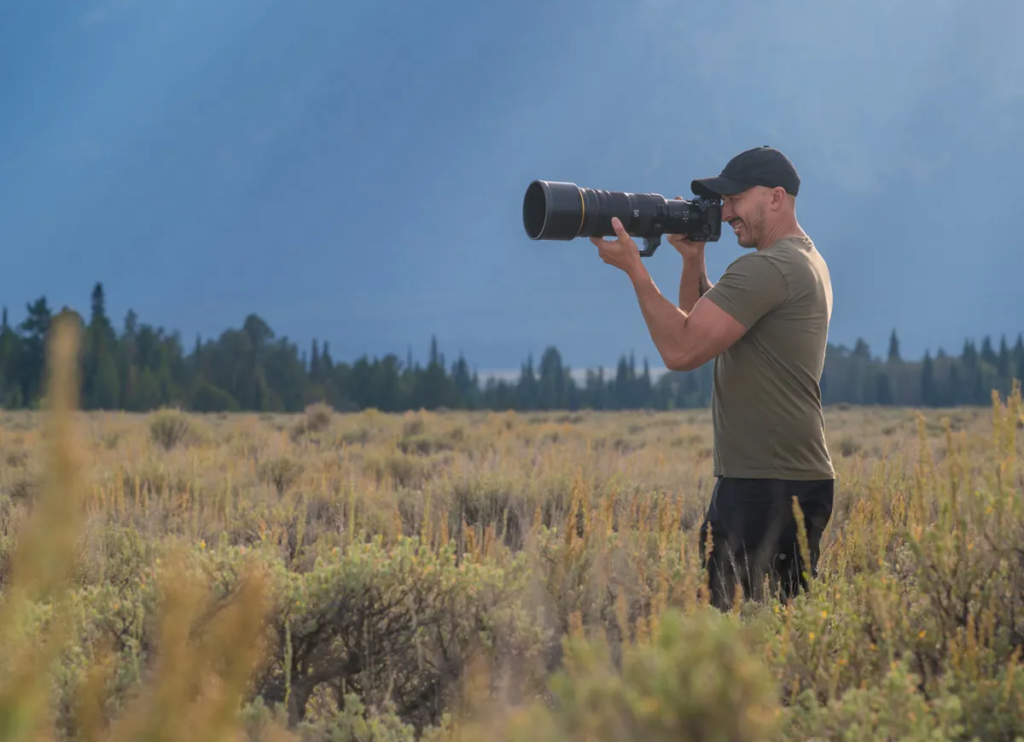
Tester feedback consistently praises the ergonomic placement of the teleconverter switch, which can be thrown intuitively by feel using a single finger while keeping the eye locked on the electronic viewfinder. However, reviewers universally agree that while 2.7 kg is a major engineering achievement for a lens of this spec, extended field sessions still demand the support of a sturdy monopod or fluid tripod head.
Industry experts recommend this lens primarily for action-oriented wildlife photographers, expedition leaders, and sports media teams who demand ultimate adaptability. For birders who exclusively shoot distant shorebirds or high-altitude raptors, reviewers note that dedicated ultra-telephoto primes (such as a 600mm or 800mm) remain the more logical tool. However, for general habitat storytelling and dynamic behavioral photography, this zoom is unmatched.
5. Practical Advantages and Disadvantages for Nature Photography
Advantages
The primary strength of this lens lies in its unmatched field versatility. A single camera body setup allows a photographer to handle wide habitat views at 120mm, medium-distance behavioral shots at 300mm f/2.8, and distant subjects at 420mm f/4 without missing a frame.
The internal zoom and focus mechanics provide another significant practical advantage. Because all element movements occur entirely inside the barrel, the physical length and center of gravity remain completely fixed. This ensures smooth, effortless balancing on fluid tripod heads and gimbal mounts during active panning.
Weight distribution has also been meticulously optimized. Weighing 2,735 grams, it is significantly lighter than legacy F-mount equivalents, noticeably reducing fatigue during long hours of active handheld or monopod tracking in rugged terrain.
Disadvantages
The most significant barrier to adoption is its prohibitive price point. Launching at $13,999.95 USD (€15,749 EUR), this tool represents a massive financial investment that places it well beyond the reach of casual hobbyists or budget-conscious enthusiasts.
Additionally, despite impressive weight savings compared to previous generations, the substantial physical footprint cannot be ignored. Transporting a 353.5mm-long lens along with support gear across miles of wilderness remains a physically demanding undertaking that requires specialized camera backpacks and robust support systems.
Technical Specifications Overview
| Specification Feature | NIKKOR Z 120-300mm f/2.8 TC VR S Details |
| Focal Length Range | 120–300mm (168–420mm with built-in 1.4x teleconverter engaged) |
| Maximum Aperture | Constant f/2.8 (drops to f/4 when 1.4x teleconverter is active) |
| Optical Construction | 30 elements in 24 groups (includes Super ED, ED, SR, Aspherical) |
| Autofocus Actuator | Silky Swift Voice Coil Motor (SSVCM) |
| Image Stabilization | Up to 6.5 stops with Synchro VR support |
| Dimensions (DxL) | Approx. 128 mm × 353.5 mm |
| Weight | Approx. 2,735 g (6.03 lbs) |
| Filter Compatibility | 112mm front filter thread & 46mm drop-in rear filter slot |
| Tripod Mount | Built-in Arca-Swiss compatible collar foot |
| Launch Price | $13,999.95 USD / €15,749 EUR |
Conclusion: Is It Worth the Investment?
At GoToBirding, I always stay honest about gear. Great optics don’t automatically make you a better photographer. Patience and fieldcraft matter far more out in the woods. Still, the right tools make a massive difference in critical moments.
The NIKKOR Z 120-300mm f/2.8 TC VR S is a serious engineering marvel. Based on optical test data, it offers incredible flexibility for Nikon wildlife photographers. It costs a fortune, no doubt. But for working pros and serious nature documentarians who cannot afford to miss a single shot, this single lens can easily replace multiple primes in the backpack.
Affiliate Disclosure: At GoToBirding, I maintain full transparency with our readers. Some links in this review are affiliate links. If you purchase through them, I may earn a small commission at no extra cost to you. I only recommend gear based on technical merits, field utility, and honest industry feedback.

Lorand Vigh is a nature conservation professional and lifelong birder based in Serbia (Vojvodina). With over 30 years of field experience in birdwatching, habitat protection, and conservation management, he has worked on bird monitoring projects, habitat restoration initiatives, and cross-border conservation cooperation. GoToBirding is a personal project built on real field experience, sharing practical, science-based advice for birders and wildlife photographers.