
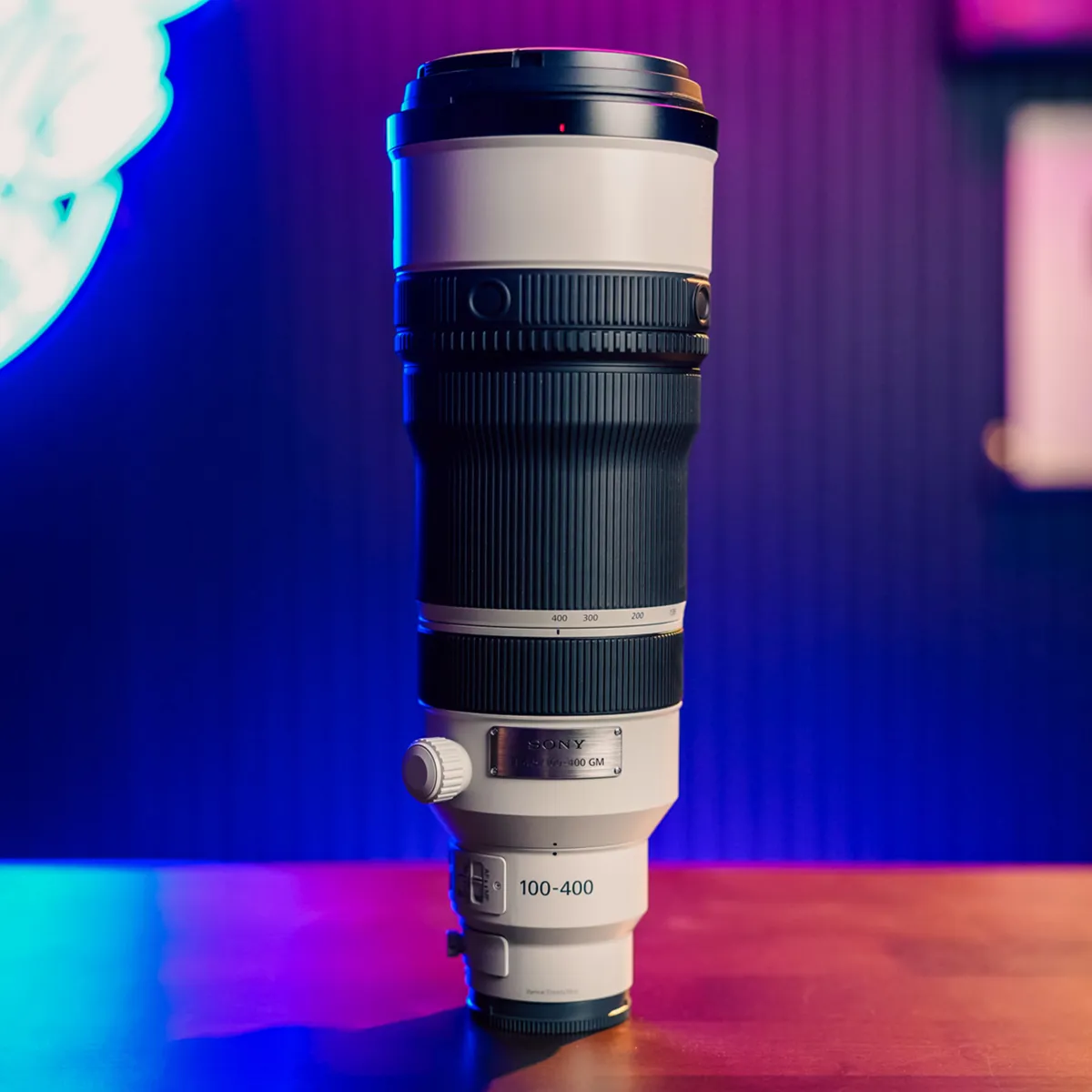
Sony has officially introduced the new Sony FE 100-400mm F4.5 GM OSS, and for bird photographers and wildlife enthusiasts, this may become one of the most exciting lens releases in years.
At first glance, it might sound like a simple refresh of the legendary original Sony 100-400mm GM, but this new version is something far more ambitious. Sony has redesigned the concept almost entirely. The new lens introduces a constant f/4.5 aperture throughout the entire zoom range, a fully internal zoom mechanism, significantly faster autofocus performance, and a more advanced optical design aimed directly at professional wildlife, sports, and action photographers.
For years, the original Sony 100-400mm GM earned enormous respect in the birding and wildlife photography world because it balanced image quality, portability, autofocus speed, and versatility better than almost any competing telephoto zoom. It became a favorite among bird photographers who wanted professional-level reach without carrying an oversized super-telephoto lens into the field every day.
But wildlife photography has changed dramatically since the original lens launched. Modern Sony cameras such as the Sony Alpha 1 II, Sony Alpha a9 III, and Sony Alpha a7R VI now feature astonishing bird eye autofocus systems, AI subject recognition, blackout-free shooting, and burst speeds that push wildlife photography into an entirely new era.
The new Sony FE 100-400mm F4.5 GM OSS appears designed specifically for that generation of cameras.
And after looking carefully at the specifications, early reactions from wildlife photographers, and Sony’s official announcements, one thing becomes very clear: this lens is no longer trying to be the lightweight compromise option. Sony is aiming directly at professional wildlife and sports photographers who want maximum autofocus performance, premium optics, and top-tier reliability.
For bird photographers, this creates a fascinating situation. The original 100-400mm GM was beloved partly because it remained relatively compact and easy to carry. The new version sacrifices some of that portability in exchange for dramatically improved performance and handling characteristics.
The result could potentially become one of the best all-around wildlife zoom lenses ever created for the Sony system.
In this detailed review, we will explore what makes the new Sony FE 100-400mm F4.5 GM OSS special, how it compares to the original version, what bird photographers can realistically expect in the field, and whether this lens truly deserves the excitement currently building around it in the wildlife photography community.
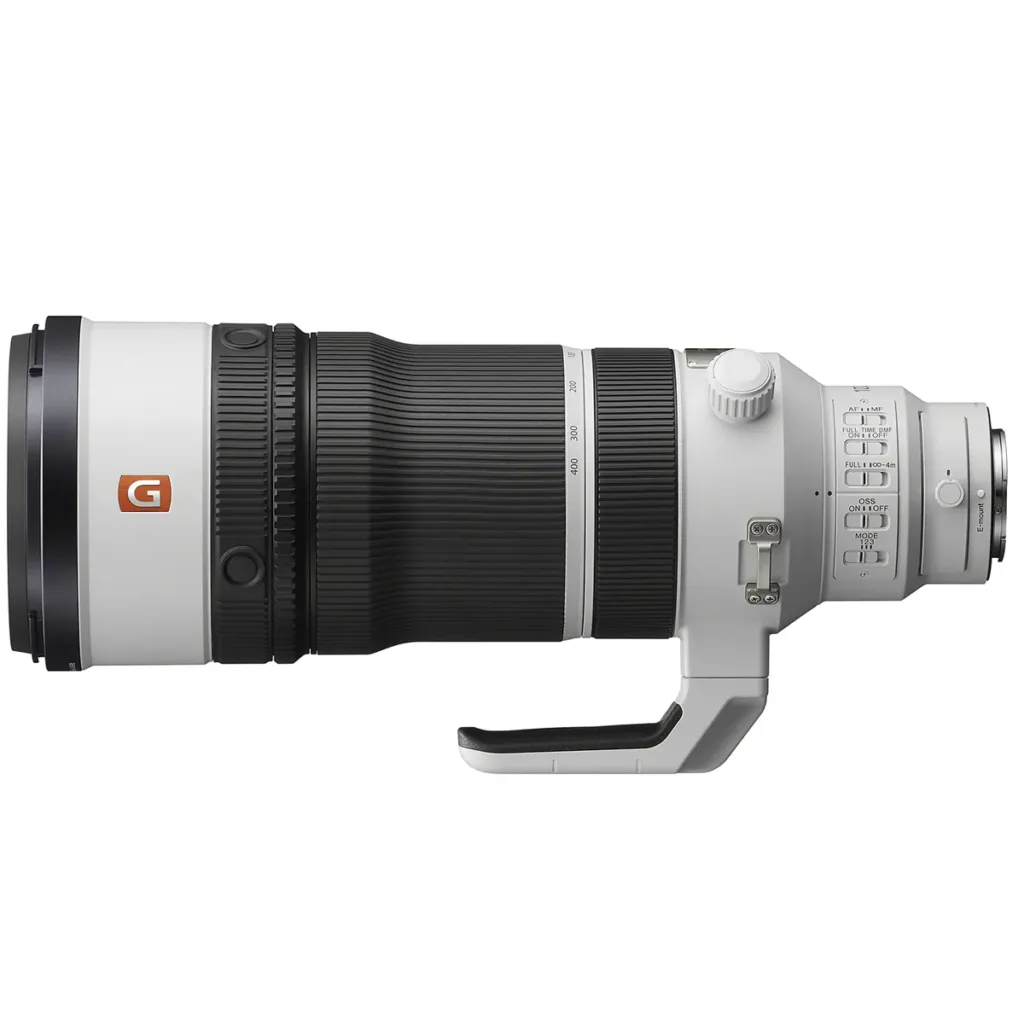
A Completely Different Philosophy Than the Original
The original Sony 100-400mm GM succeeded because it balanced performance with mobility. It gave photographers excellent image quality and autofocus while remaining manageable enough for hiking, travel, and long handheld shooting sessions.
The new Sony FE 100-400mm F4.5 GM OSS takes a very different approach.
Sony clearly decided not to simply make a lighter or slightly sharper update. Instead, they created a much more serious professional wildlife tool designed around speed, stability, and consistency.
The biggest change is immediately obvious: the lens now features a constant f/4.5 aperture throughout the entire zoom range.
That may sound like a relatively small improvement on paper, but for wildlife photographers, it changes the shooting experience significantly.
With the original lens, photographers reached f/5.6 at 400mm. The new version remains at f/4.5 even fully zoomed in. This allows:
- more light reaching the sensor,
- faster shutter speeds,
- improved low-light capability,
- better subject separation,
- and more consistent exposure settings while zooming.
For bird photography, especially during sunrise or sunset activity periods, this becomes extremely valuable. Birds are most active precisely when light conditions are often difficult. A brighter telephoto lens directly improves the ability to freeze motion and maintain cleaner ISO performance.
The second revolutionary change is the internal zoom design.
Unlike the previous model, the lens no longer physically extends outward while zooming. The barrel remains fixed regardless of focal length. This dramatically changes handling characteristics in real-world wildlife photography.
Internal zoom systems offer several important advantages:
- better balance during handheld shooting,
- smoother panning for birds in flight,
- improved weather resistance,
- reduced dust intake,
- and more stable tripod performance.
For bird photographers tracking fast-moving subjects, especially raptors or seabirds, stable balance can improve keeper rates considerably.
However, these improvements come with a cost.
The new lens is significantly larger and heavier than the original version. This has become one of the most discussed aspects of the release among wildlife photographers.
Sony appears to have prioritized professional handling and performance over portability. Some photographers will absolutely love this direction, while others may miss the original lens’s lightweight flexibility.
Why Bird Photographers Are So Excited
Bird photography is one of the most demanding forms of photography in existence. Subjects move unpredictably, distances constantly change, lighting conditions are often poor, and autofocus performance can determine whether a moment is captured or completely missed.
That is why so many wildlife photographers became immediately interested in this lens announcement.
The combination of:
- constant f/4.5 brightness,
- internal zoom,
- advanced autofocus motors,
- premium G Master optics,
- and compatibility with Sony’s newest AI autofocus systems
makes this lens potentially extraordinary for bird photography.
The autofocus improvements alone sound incredibly promising. Sony claims dramatically faster focusing performance compared to the previous generation. Combined with modern Sony bodies like the A9 III, this could create one of the fastest bird photography systems currently available.
Birds in flight will likely become the lens’s greatest strength.
One challenge with extending zoom lenses is balance shifting during rapid movement. As the lens extends outward, the center of gravity changes. During fast panning, especially at 400mm, this can subtly affect stability and tracking smoothness.
An internal zoom eliminates that issue entirely.
This matters more than many non-wildlife photographers realize. Bird photography often involves long sequences of continuous tracking while maintaining a stable frame on erratically moving subjects. Small ergonomic improvements can produce very noticeable real-world differences.
The brighter aperture also helps autofocus systems work more effectively under difficult lighting conditions. Faster subject acquisition during dawn or forest shooting could become a major advantage.
Many photographers are also excited about the lens’s potential compatibility with high-speed Sony bodies. The A9 III’s global shutter technology combined with a next-generation wildlife zoom could produce astonishing birds-in-flight performance.
For small birds, especially swallows, terns, kingfishers, or warblers, autofocus responsiveness becomes absolutely critical. Wildlife photographers are already speculating that this may become Sony’s ultimate action wildlife zoom.
The lens also seems highly suited for hybrid wildlife creators who shoot both photography and video. Internal zoom systems are extremely desirable for professional wildlife filmmaking because they maintain balance on gimbals and produce smoother zoom behavior.
Combined with Sony’s growing dominance in wildlife video production, this lens could become popular far beyond still photography.
Image Quality Expectations
While full long-term field testing is still limited, early information strongly suggests that the new Sony FE 100-400mm F4.5 GM OSS will deliver extraordinary optical performance.
Sony’s recent G Master lenses have consistently pushed image quality to extremely high levels, and this lens appears designed to continue that trend.
The brighter constant aperture already provides one major optical advantage: more consistent rendering throughout the zoom range.
At 400mm and f/4.5, photographers should see:
- stronger background compression,
- smoother bokeh,
- improved subject isolation,
- and cleaner separation between birds and distracting backgrounds.
This is particularly important for woodland bird photography where cluttered branches and foliage can easily overwhelm the subject.
Bird photographers often judge telephoto lenses heavily on feather rendering. Fine feather textures, eye detail, and microcontrast reveal the true quality of wildlife optics. Sony’s recent optical engineering suggests this lens may become exceptionally strong in these areas.
Sharpness across the frame also appears likely to improve over the already excellent original version.
High-resolution cameras like the Sony A7R VI place enormous demands on telephoto lenses. A 60+ megapixel wildlife sensor exposes optical weaknesses immediately. Sony clearly designed this lens to support the newest generation of ultra-high-resolution bodies.
Another major advantage for wildlife photographers is likely to be improved edge-to-edge consistency. Birds in flight are not always perfectly centered in the frame, so maintaining strong sharpness across wider areas becomes valuable during dynamic shooting situations.
Chromatic aberration control also matters greatly in bird photography because birds are frequently photographed against bright skies or reflective water. High-contrast feather edges can easily reveal optical flaws. Sony’s premium telephoto engineering typically performs very well in this area.
The internal zoom construction may also contribute indirectly to optical consistency. Internal designs often allow more controlled optical alignment compared to extending mechanisms.
Of course, ultimate judgment will depend on extensive field testing, but everything currently suggests this lens is designed to compete at the absolute highest professional wildlife level.
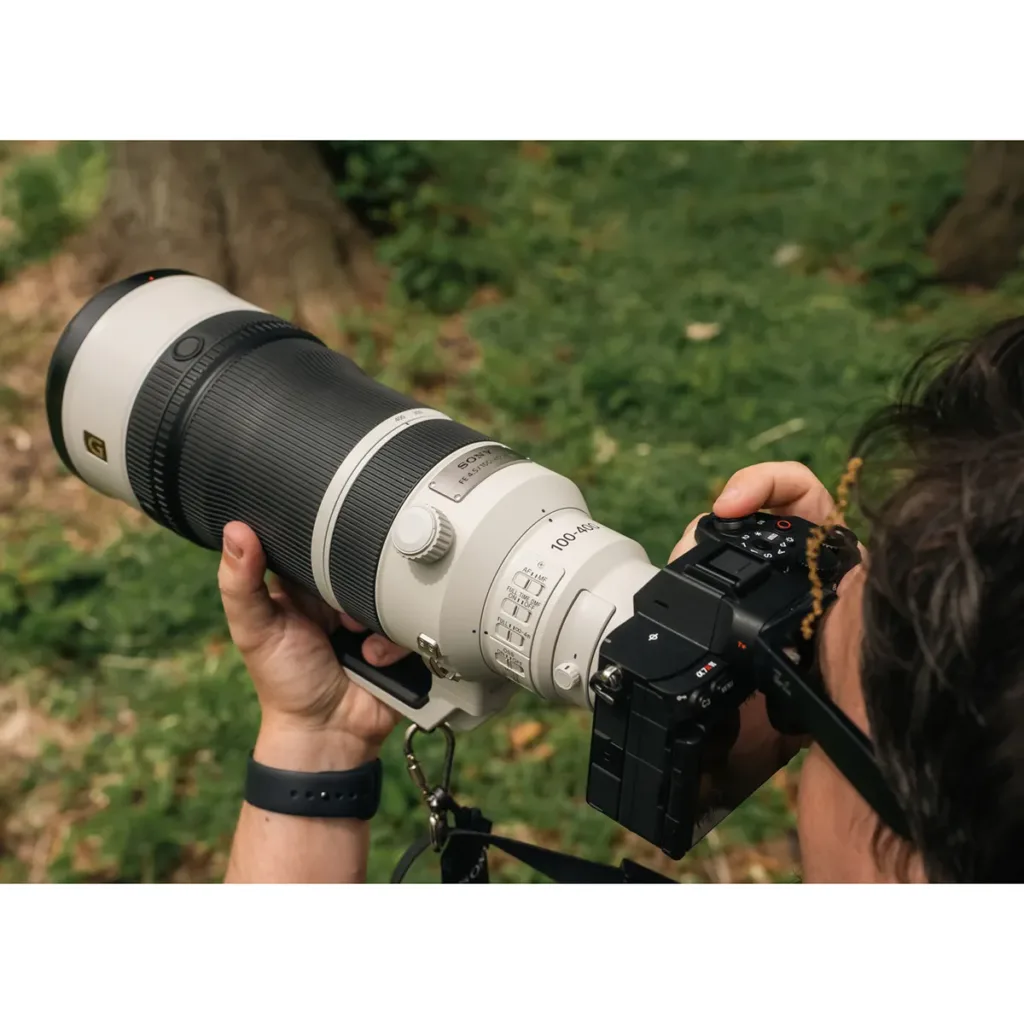
Handheld Wildlife Photography Experience
One of the biggest questions surrounding this lens is simple: how practical will it feel in real-world handheld wildlife photography?
The original 100-400mm GM earned enormous popularity partly because it remained surprisingly manageable for hiking and long outdoor sessions. Many photographers loved being able to carry it comfortably for hours.
The new version changes that equation.
At roughly 1840 grams, the new lens becomes substantially heavier and larger. This places it much closer to serious professional telephoto territory rather than lightweight travel wildlife gear.
For some photographers, that may sound disappointing initially.
However, there is another perspective.
Many wildlife professionals actually prefer slightly heavier, better-balanced internal zoom lenses because they feel more stable during tracking and panning. Lightweight does not always mean easier during fast action photography.
The internal zoom system likely creates a more centered balance point, especially at 400mm. That could improve birds-in-flight shooting dramatically even if total weight increases.
Modern Sony camera ergonomics also continue improving, helping offset some handling concerns.
Still, photographers who prioritize:
- ultralight hiking,
- minimalist travel kits,
- or all-day handheld comfort
may still prefer the older 100-400mm GM or other lighter telephoto options.
This new lens appears aimed more directly at serious enthusiasts and professionals willing to carry additional weight in exchange for maximum performance.
And for many bird photographers, that tradeoff may absolutely be worth it.
Sony 100-400mm F4.5 GM OSS vs Sony 200-600mm G
One of the most interesting comparisons is now between the new Sony FE 100-400mm F4.5 GM OSS and the extremely popular Sony FE 200-600mm f/5.6-6.3 G OSS.
The 200-600mm remains one of the best dedicated bird photography lenses Sony has ever produced because of its extraordinary reach and excellent price-to-performance ratio.
However, the new 100-400 F4.5 GM introduces advantages that may tempt many wildlife photographers.
Compared to the 200-600mm:
- it is brighter,
- likely faster focusing,
- potentially sharper,
- more compact,
- and probably better balanced for handheld shooting.
The 200-600 still dominates for maximum reach, especially for small distant birds. But the new 100-400 appears designed more as a premium action wildlife lens rather than purely a long-range birding lens.
This creates an interesting division:
- the 200-600 may remain the “bird specialist,”
- while the new 100-400 becomes the “professional all-around wildlife and action lens.”
Photographers who shoot:
- birds,
- mammals,
- sports,
- safari,
- aviation,
- and outdoor action
may find the new 100-400 dramatically more versatile.
Meanwhile, photographers focused almost entirely on small birds at long distances may still prefer the 200-600’s extra reach.
The Future of Sony Wildlife Photography
This lens also represents something larger within Sony’s ecosystem.
For years, Sony aggressively expanded into professional wildlife photography by developing:
- advanced AI autofocus,
- stacked sensors,
- blackout-free shooting,
- global shutter technology,
- and increasingly sophisticated telephoto lenses.
The new Sony FE 100-400mm F4.5 GM OSS feels like another major step in that evolution.
It is not designed merely as a consumer zoom. It feels like Sony’s statement that wildlife photography is now one of the company’s core priorities.
Combined with cameras like the A1 and A9 III, this lens could become one of the defining wildlife combinations of the next generation.
And that is exactly why bird photographers are paying so much attention right now.
Final Thoughts
The Sony FE 100-400mm F4.5 GM OSS may become one of the most important wildlife lens releases Sony has ever produced.
Rather than simply updating the original 100-400mm GM slightly, Sony completely reimagined the concept around modern professional wildlife photography.
The result is a lens that appears optimized for:
- birds in flight,
- fast action,
- advanced autofocus systems,
- professional wildlife work,
- and hybrid photo/video creation.
The constant f/4.5 aperture, internal zoom mechanism, upgraded autofocus system, and premium G Master optical design make it look incredibly promising for serious bird photographers.
At the same time, the increased size and weight mean it is no longer the lightweight hiking-friendly wildlife zoom many photographers loved previously.
Instead, Sony seems to have created something more ambitious:
a true flagship wildlife action zoom designed for the next era of mirrorless bird photography.
For wildlife photographers using Sony’s newest camera bodies, this lens could become one of the most exciting bird photography tools available anywhere today.
Note: As an affiliate, I may earn from qualifying purchases at no extra cost to you.

Lorand Vigh is a nature conservation professional and lifelong birder based in Serbia (Vojvodina). With over 30 years of field experience in birdwatching, habitat protection, and conservation management, he has worked on bird monitoring projects, habitat restoration initiatives, and cross-border conservation cooperation. GoToBirding is a personal project built on real field experience, sharing practical, science-based advice for birders and wildlife photographers.