
There’s a subtle shift that happens every spring. The same feeder that was full of activity in winter suddenly feels quieter, almost uncertain. You still see birds, but not in the same way, and naturally the question comes up: should you keep feeding them, or is it time to stop?
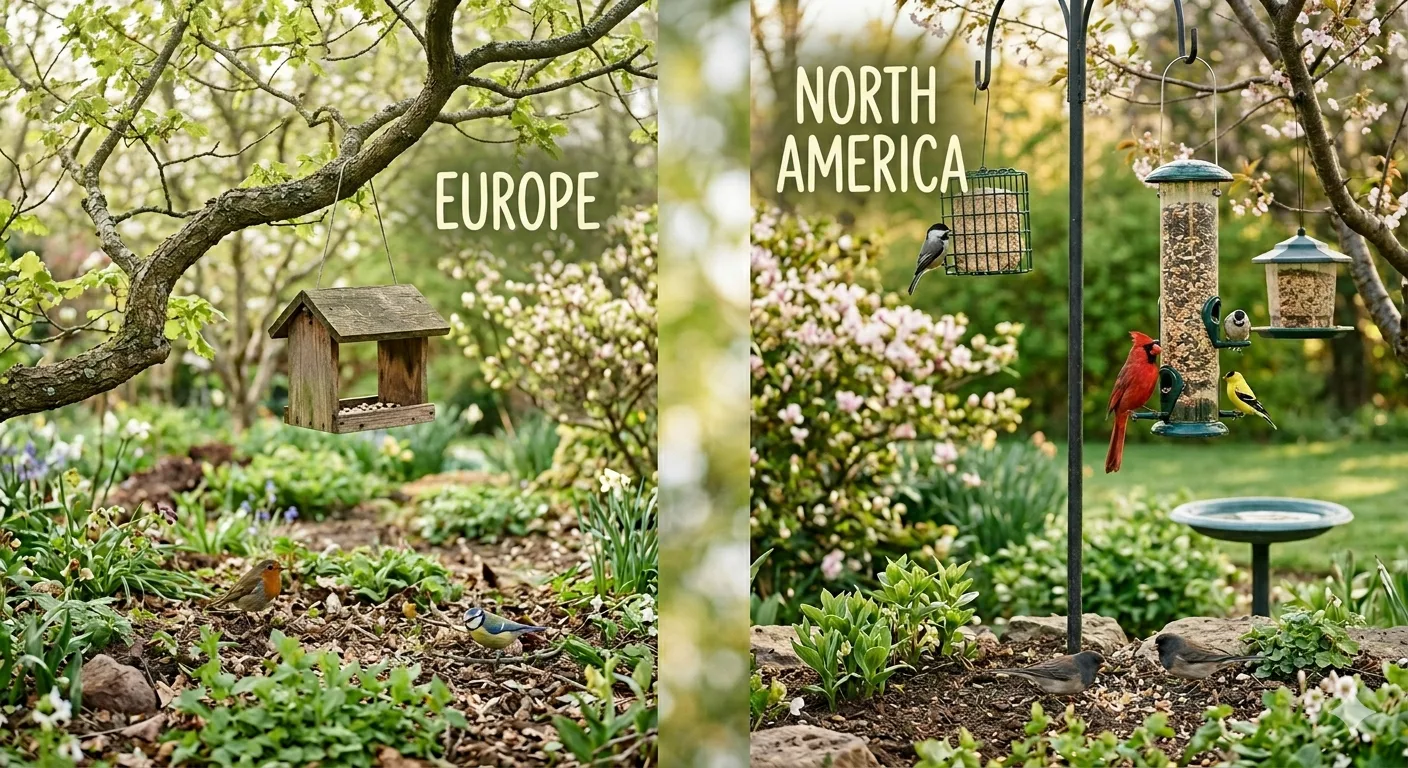
What makes this question even more interesting is that the answer isn’t universal. In much of Europe, birders are often advised to gradually stop feeding as spring progresses, while in North America, feeding birds year-round is widely accepted and even encouraged under the right conditions. At first glance, this feels contradictory, but once you look deeper, it becomes clear that both approaches are rooted in real ecological understanding.
This article isn’t about choosing sides. It’s about understanding what’s actually happening in nature during spring, and how our actions fit into that. Because the goal isn’t simply to feed birds—it’s to support them in a way that makes sense for the season they’re in.
Spring Changes Everything for Birds
Spring is not just a warmer version of winter. For birds, it’s the most demanding and biologically intense period of the year. Everything shifts at once: territories are established, nests are built, and the entire focus moves toward reproduction and survival of the next generation.
One of the most important changes happens in diet. While many backyard birds happily eat seeds during winter, spring introduces a completely different nutritional requirement. Chicks need protein to grow rapidly, and that protein comes primarily from insects. Even species that seem like strict seed-eaters suddenly spend a large part of their day hunting caterpillars, larvae, and other small invertebrates.
This means that feeders, while still useful, no longer provide complete nutrition. They become a supplement rather than a primary food source. Observant birders often notice this shift without realizing it—they see fewer visits, shorter feeding times, and more activity in trees and shrubs instead of at feeders. That’s not a decline. It’s a sign that nature is doing exactly what it’s supposed to do.
The European Perspective: Respecting Natural Cycles
Across Europe, the approach to bird feeding tends to be more seasonal, and that perspective is deeply tied to how people view their role in nature. Feeding birds is traditionally seen as a way to help them survive harsh winters, not something that needs to continue indefinitely.
As spring arrives and natural food becomes abundant, many conservation voices encourage a gradual reduction in feeding. Organizations like the Royal Society for the Protection of Birds (RSPB) often emphasize awareness rather than strict rules, but the underlying idea is consistent: when birds can support themselves naturally, it’s better to let them do so.
There’s also a practical side to this approach. Warmer weather increases the risk of bacterial growth and disease transmission at feeders, especially if they’re not cleaned regularly. At the same time, there is concern that over-reliance on seed feeders could indirectly affect chick development, even if the evidence is not always clear-cut.
Ultimately, the European mindset leans toward minimal interference. It doesn’t reject feeding—it simply places it within a seasonal context where stepping back is seen as part of responsible bird care.
The North American Approach: Feeding as a Year-Round Practice
In North America, the relationship between people and bird feeding has evolved differently. Here, feeding birds is not just a seasonal activity—it’s often a year-round habit that blends observation, enjoyment, and even citizen science.
Organizations such as the National Audubon Society and the Cornell Lab of Ornithology generally support continued feeding throughout the year, as long as it’s done responsibly. The key difference is that feeders are not seen as replacing natural food sources, but rather as complementing them.
Research and long-term observation suggest that most birds do not become fully dependent on feeders. Instead, they use them as a convenient energy source while still relying heavily on natural foods, especially during breeding season. Many species have also adapted well to human environments and regularly incorporate feeders into their daily routines.
This approach doesn’t ignore risks, but it assumes that with proper hygiene and awareness, feeding can remain beneficial even in spring. It reflects a more integrated view, where human presence is part of the ecosystem rather than something that must always be minimized.
A special case: hummingbirds and spring feeding in North America
When talking about bird feeding in spring, North America has one very unique group that changes the entire conversation: hummingbirds. Unlike most seed-eating backyard birds, hummingbirds are highly specialized nectar feeders, and their seasonal behavior makes spring feeding not just common, but often essential in certain regions.
As temperatures rise, hummingbirds migrate north from Central America and southern parts of the United States, following the blooming cycle of flowers. Their arrival is one of the most anticipated seasonal events for many backyard birders. Because natural nectar sources are still limited early in the season, feeders filled with sugar water often play an important transitional role.
This is where responsible feeding becomes especially important. Organizations like the National Audubon Society recommend offering clean, properly prepared nectar solutions during migration periods, particularly in early spring when flowers are not yet abundant. The key is not abundance, but timing and maintenance.
Hummingbird feeders are different from seed feeders in one crucial way: they require much stricter hygiene. Warm spring temperatures can cause fermentation and bacterial growth very quickly, which makes regular cleaning and fresh nectar replacement essential. When managed properly, however, feeders can safely support migrating birds during a critical energy-demanding phase.
What makes hummingbirds especially interesting is that they blur the line between supplementation and necessity. While they do rely heavily on natural flowers, early-season feeders can act as a bridge, helping them recover from migration and establish territories before full bloom cycles begin.
In this sense, hummingbirds highlight the broader theme of spring feeding in North America: it is less about replacing nature, and more about temporarily supporting it during transition periods.
Understanding the Difference Without Choosing Sides
At first glance, the European and North American approaches might seem contradictory, but they are really responses to slightly different ecological and cultural contexts. Both aim to support birds, just in different ways.
In Europe, the emphasis is on preserving natural behaviors and reducing interference once it is no longer necessary. In North America, the focus is on coexistence and responsible interaction, even throughout the year. Neither approach is inherently better; each reflects a balance between helping and stepping back.
What matters more than following a strict rule is understanding why birds behave differently in spring. Once you see feeders as just one small part of a much larger system, the question shifts from “should I feed or not” to something more nuanced: “what do birds actually need right now?”
That shift in thinking is where more experienced birders begin to move beyond habits and start making decisions based on observation and context rather than routine.
What Birds Actually Need in Spring
When you look closely at bird behavior in spring, it becomes clear that energy alone is not enough. Birds are not just trying to survive—they are trying to reproduce successfully, which requires a very specific set of conditions.
Protein becomes critical because it fuels growth. A chick cannot develop properly on seeds alone, no matter how abundant they are. This is why even familiar feeder visitors spend so much time searching for insects during this period. It’s not a preference—it’s a biological necessity.
In addition to food, access to clean water becomes increasingly important. Birds use water not just for drinking, but for maintaining their feathers, which directly affects their ability to regulate temperature and stay agile. At the same time, safe nesting spaces and undisturbed environments play a huge role in whether breeding efforts succeed.
Feeders, in this context, are helpful but incomplete. They can provide quick energy, especially during unpredictable weather, but they cannot replace the richness of a natural food web. Understanding this is key to making better decisions about how to support birds beyond simply filling a feeder.
Water and Habitat: The Real Game Changers
If there is one thing that consistently proves more valuable than feeding during spring, it is providing a reliable source of fresh water. A simple bird bath, when kept clean and regularly refreshed, can attract a surprising variety of species and support them in ways that food alone cannot.
Water becomes especially important as temperatures rise and natural sources may fluctuate. Birds depend on it daily, and in many cases, they will prioritize access to water over supplemental food. Unlike feeders, which tend to attract specific species, water sources often serve a broader range of birds.
Beyond water, the idea of habitat begins to take center stage. A garden or yard that supports insects, offers shelter, and provides nesting opportunities becomes far more valuable than any feeder setup. Native plants, reduced pesticide use, and a slightly “wilder” approach to landscaping can dramatically increase the number of birds that visit and stay.
This is where birding shifts from feeding to creating. Instead of offering isolated resources, you begin to support an entire system—and that has a much deeper and longer-lasting impact.
Hygiene and Responsibility in Warmer Months
As spring turns into early summer, one of the most overlooked aspects of bird feeding becomes increasingly important: cleanliness. Warm temperatures create ideal conditions for bacteria and mold, which can spread quickly through shared feeding spaces.
Organizations like the Centers for Disease Control and Prevention highlight the importance of maintaining clean environments when interacting with wildlife, and bird feeders are no exception. What might have been relatively low-risk in winter can become problematic if hygiene is neglected.
Cleaning feeders regularly, ensuring that food remains dry and fresh, and avoiding overcrowding are all part of responsible feeding. This is especially relevant if you choose to continue feeding during spring and summer, as is more common in North America.
The goal is not to eliminate all risk—that’s impossible—but to reduce it to a level where feeding remains a net positive rather than a potential source of harm. This is where good intentions need to be matched with consistent care.
Final Thoughts: Knowing When to Step Back
One of the most valuable lessons in birding is learning that helping doesn’t always mean doing more. Sometimes, the most responsible choice is to recognize when nature no longer needs our direct input.
Spring is a turning point. Birds become less dependent on us, more focused on their own cycles, and more connected to the natural resources around them. Continuing to feed is not inherently wrong, but it should come with an understanding of its limited role during this season.
Whether you follow a more European approach and gradually stop, or a North American one and continue responsibly, the key is awareness. Pay attention to what birds are actually doing, not just what you’ve always done.
Because in the end, supporting birds isn’t about maintaining a habit. It’s about adapting to what they need—season by season, moment by moment.
Note: This article may contain affiliate links. If you purchase through them, we may earn a small commission at no extra cost to you. We only recommend products and practices based on research and real user experiences.
Lorand Vigh is a nature conservation professional and lifelong birder based in Serbia (Vojvodina). With over 30 years of field experience in birdwatching, habitat protection, and conservation management, he has worked on bird monitoring projects, habitat restoration initiatives, and cross-border conservation cooperation. GoToBirding is a personal project built on real field experience, sharing practical, science-based advice for birders and wildlife photographers.