
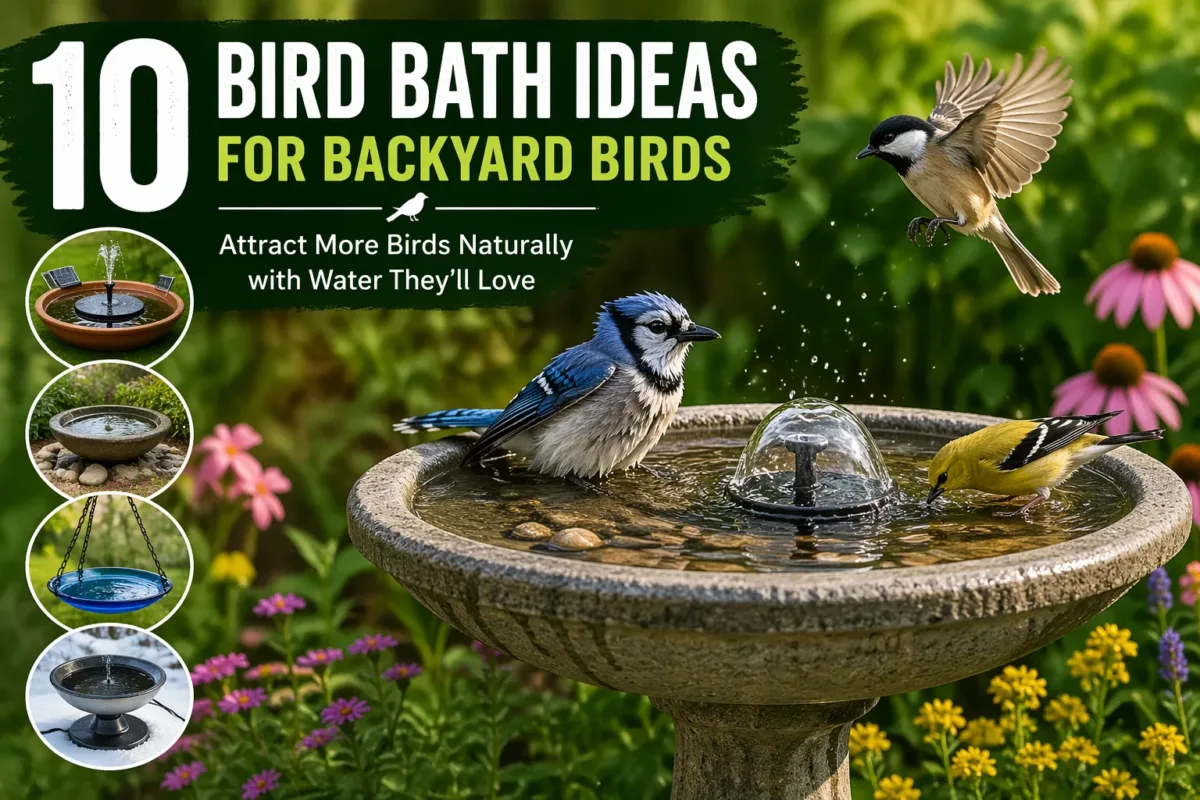
If there’s one simple upgrade that can completely transform your backyard into a thriving bird haven, it’s adding a bird bath. From my own experience—and after going through countless reviews, birding forums, and real-world setups—water is often the missing piece that turns a quiet yard into a lively, constantly active bird hotspot.
Food brings birds in. But water keeps them coming back.
Whether you’re just starting out or looking to upgrade your setup, these bird bath ideas are designed to be practical, effective, and tailored to real bird behavior—not just aesthetics. I’ve also included insights gathered from experienced birders and backyard enthusiasts so you can make smarter decisions without trial and error.
Let’s dive in.
1. Classic Pedestal Bird Bath (With a Modern Twist)
The classic pedestal bird bath remains one of the most reliable and widely used options for a reason—it works. Its elevated design makes it highly visible to birds flying overhead, which is one of the most important factors in attracting initial visits. But while the traditional look is appealing, the real success of a pedestal bath lies in how well it aligns with birds’ natural preferences. Through research and feedback from experienced birders, one thing becomes clear: shallow, textured basins are far more effective than deep, smooth ones. Birds are instinctively cautious around water that appears too deep or slippery, so aiming for a gradual slope with a maximum depth of around 2–5 cm (1–2 inches) makes a significant difference.
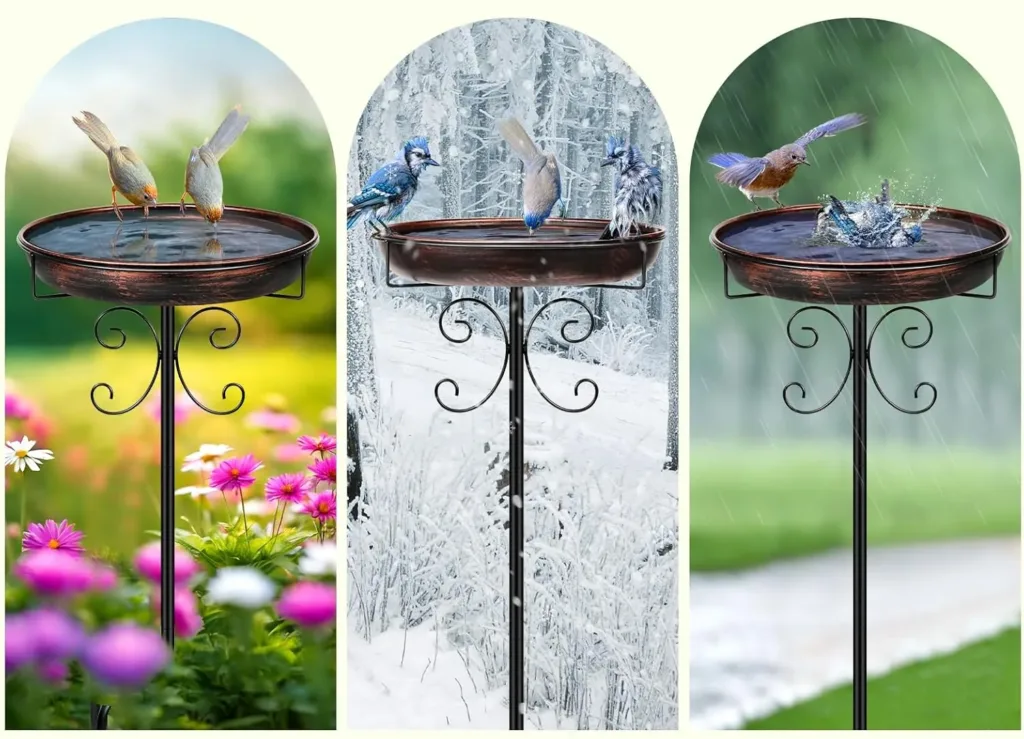
Modern improvements can make this classic design even more effective. Adding small stones or gravel inside the basin not only improves grip but also creates multiple depth zones, allowing different species to use the bath comfortably. Materials also play a role—concrete retains a more stable temperature during hot weather, while ceramic options can strike a balance between durability and aesthetics. Lightweight plastic baths may be easier to move, but they often require more careful placement to avoid overheating or tipping.
Placement is equally critical. Positioning the bath in partial shade helps keep water cooler and reduces evaporation, while nearby shrubs provide birds with a sense of security. However, avoid placing it too close to dense cover where predators could hide. With just a few thoughtful adjustments, a classic pedestal bird bath can become one of the most dependable and frequently visited features in your backyard.
2. Solar Fountain Bird Bath for Movement and Sound
Adding a solar fountain to your bird bath is one of the most impactful upgrades you can make, especially if your goal is to increase both the number and variety of visiting birds. In nature, birds are naturally drawn to moving water because it signals freshness and safety. A still water source may go unnoticed for days, but even a subtle ripple or gentle bubbling effect can immediately capture attention. From what I’ve seen across birding communities and product reviews, introducing motion often results in a noticeable spike in bird activity within a very short time.
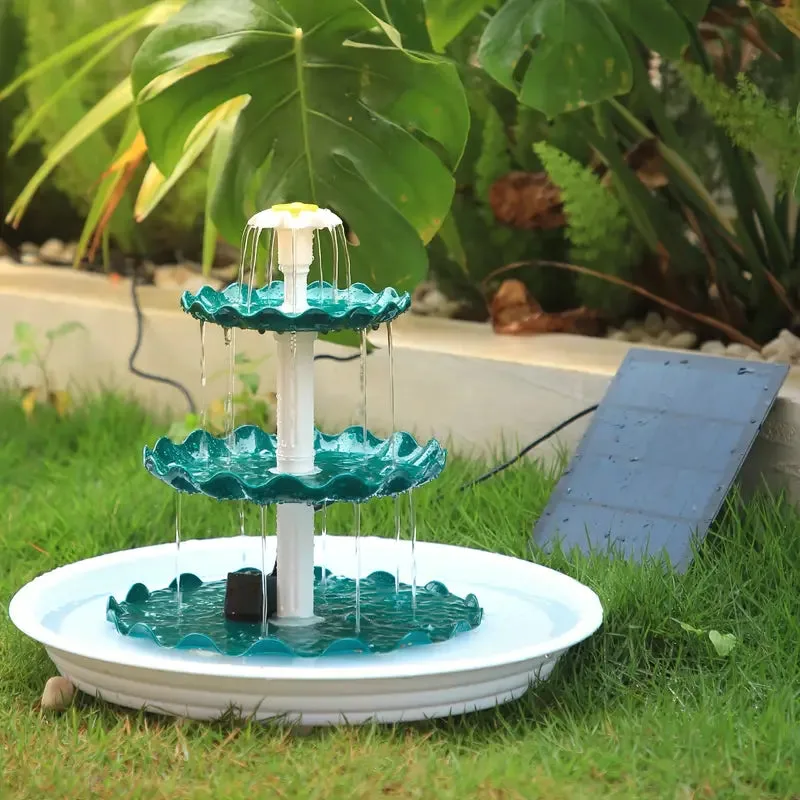
The key to success with solar fountains is choosing the right type of movement. Strong sprays or high jets might look impressive to us, but they can actually deter birds, especially smaller species. Instead, a soft bubbling effect or a low, consistent trickle tends to work best. These mimic natural water sources like shallow streams or dripping leaves, which birds instinctively trust. The sound component is just as important—gentle water noise can attract birds from beyond your immediate yard.
Of course, there are practical considerations. Solar fountains require direct sunlight to operate effectively, so placement is crucial. Ideally, your bath should receive at least 4–6 hours of sunlight per day while still offering nearby shaded perches for birds to retreat to. Maintenance is another factor—keeping the pump clean and free of debris ensures consistent performance.
When done right, a solar fountain doesn’t just enhance your bird bath visually—it transforms it into a dynamic, living feature that birds actively seek out and return to regularly.
3. Ground-Level Bird Bath (The Natural Approach)
Ground-level bird baths offer a more natural and often surprisingly effective way to attract a wider range of bird species, particularly those that are less comfortable using elevated water sources. In the wild, birds frequently encounter water in the form of puddles, shallow streams, or rain-filled depressions, so replicating this environment in your backyard can make your setup feel instantly familiar and safe. Many species, including thrushes, doves, and certain sparrows, show a clear preference for ground-access water, which makes this approach especially valuable if you’re looking to diversify the types of birds visiting your yard.
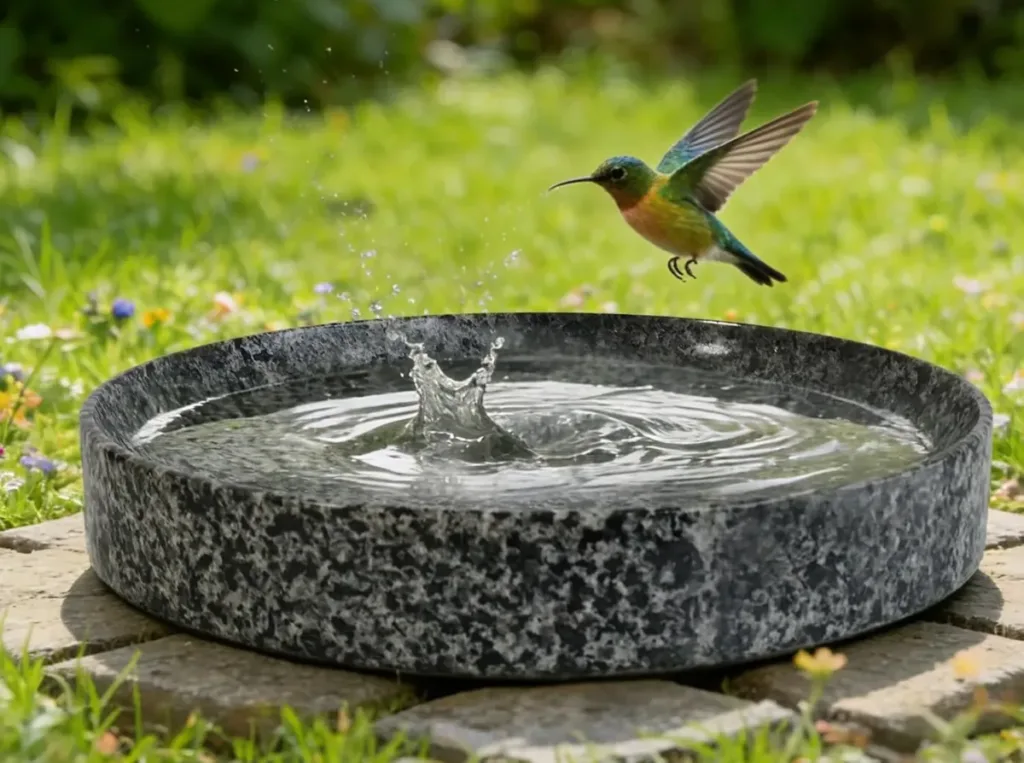
The simplicity of a ground bath is part of its appeal. A shallow dish, tray, or even a repurposed plant saucer can work perfectly as long as the water remains shallow and accessible. However, placement becomes even more important compared to elevated baths. Birds need a clear line of sight to detect potential threats, but they also rely on nearby cover for quick escape. Positioning the bath near low shrubs or natural landscaping elements strikes the right balance between safety and visibility.
Because ground-level baths are more exposed to dirt, leaves, and debris, they do require more frequent cleaning. Regular maintenance ensures the water remains fresh and safe, which directly impacts how often birds will use it. Adding natural elements like stones, logs, or native plants around the bath can further enhance its appeal, creating a setting that feels less artificial and more like a natural water source.
While it may not have the visual impact of a decorative pedestal bath, a well-placed ground-level bird bath often delivers some of the most rewarding and consistent bird activity.
4. Hanging Bird Bath for Small Spaces
For those working with limited outdoor space, such as balconies, patios, or compact gardens, a hanging bird bath can be an excellent and highly practical solution. Suspended from a tree branch, hook, or pergola, these baths provide an elevated water source that is particularly appealing to smaller bird species. One of the biggest advantages of this setup is the added sense of security it offers—being off the ground reduces the risk from common predators like cats, making birds more likely to approach and use the bath regularly.
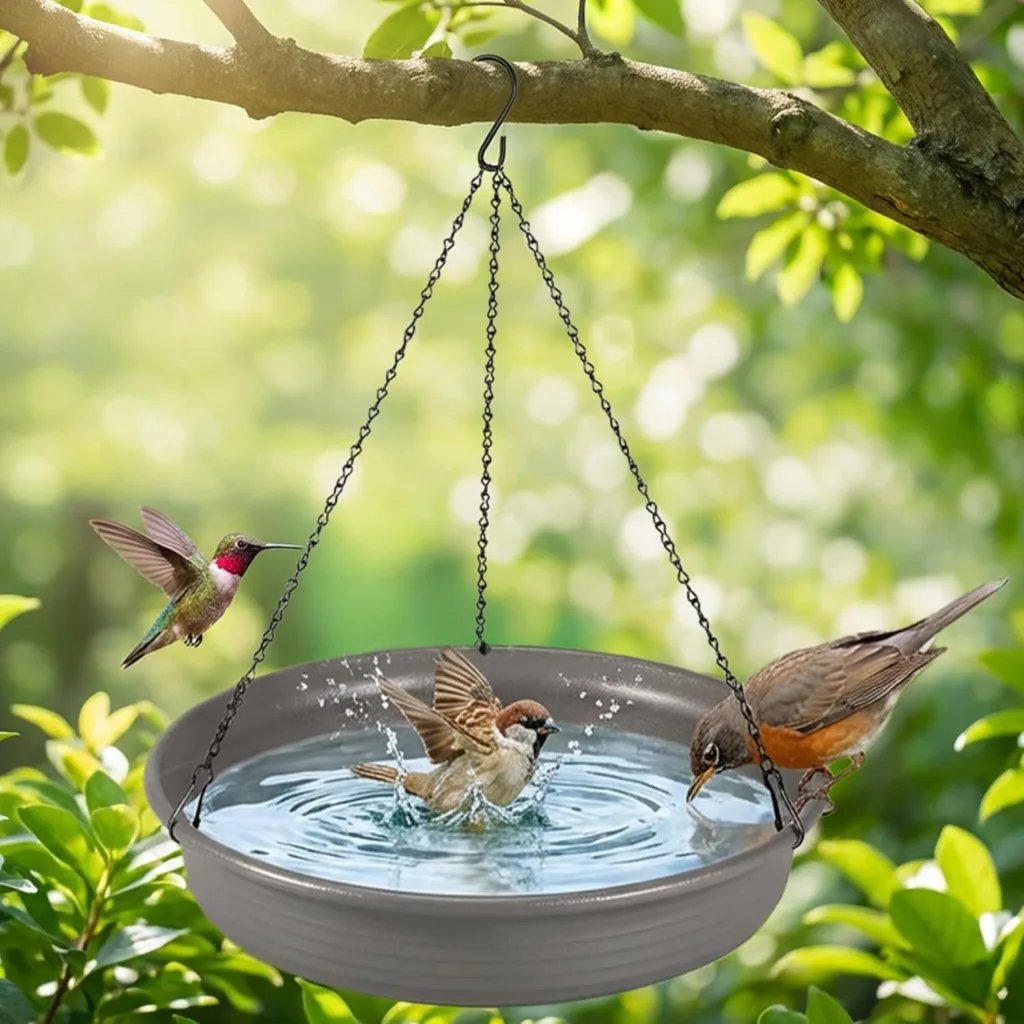
However, not all hanging bird baths perform equally well. Stability is one of the most important factors to consider. Birds are naturally cautious, and a bath that sways too much in the wind can discourage them from landing. Choosing a design with a balanced structure or adding a bit of weight to the base can help minimize movement and create a more inviting environment. Shallow basins with textured surfaces are just as important here as they are with other bath types, ensuring birds feel secure while drinking or bathing.
Another benefit of hanging bird baths is their versatility in placement. They can be positioned at eye level, making it easier to observe bird behavior up close, which is particularly rewarding for backyard birdwatchers. When combined with feeders placed at a safe distance, they can create a natural flow where birds move between feeding and drinking areas.
Although larger birds may not use hanging baths as frequently due to space limitations, they remain one of the most effective and space-efficient ways to provide water in urban or compact environments.
5. DIY Shallow Dish Bird Bath (Budget-Friendly and Effective)
Creating a DIY bird bath is one of the most accessible and rewarding ways to support backyard birds, especially if you’re just getting started or prefer a more flexible approach. What stands out from both personal experience and feedback from other birders is that birds respond far more to functionality than to design. This means that even the simplest setup—if done correctly—can outperform more decorative and expensive options. A shallow dish or tray combined with a few carefully placed stones can create an ideal bathing environment that accommodates different bird sizes and behaviors.
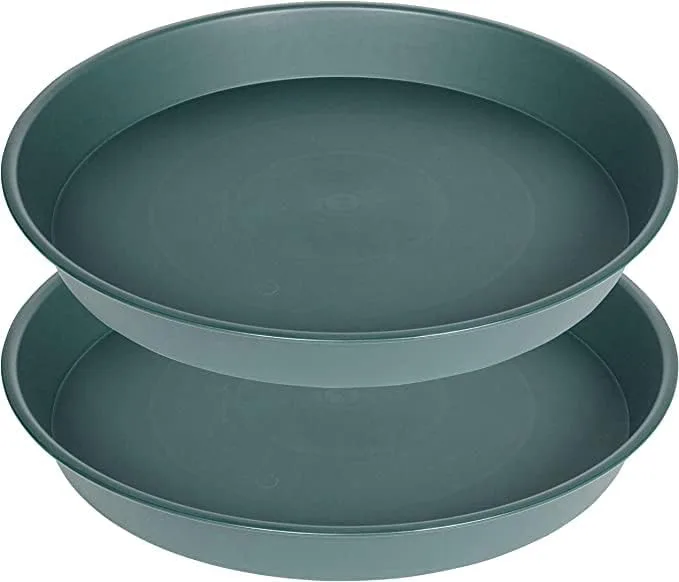
The beauty of a DIY approach lies in its adaptability. You can experiment with different materials such as plant saucers, ceramic bowls, or even repurposed household items to find what works best in your space. Adding stones or pebbles serves multiple purposes: it provides stable footing, creates varying water depths, and makes the bath more visually natural. This is especially helpful for smaller birds that prefer to wade rather than fully submerge.
Another advantage is the ability to easily reposition the bath based on bird activity, sunlight, or seasonal changes. If one spot isn’t attracting visitors, you can simply move it without much effort. This kind of flexibility allows you to learn and adjust quickly, which is often the key to long-term success in backyard birding.
While DIY baths may lack the polished look of store-bought designs, they excel where it matters most—providing a safe, practical, and consistently used water source for birds.
6. Heated Bird Bath for Winter Birding
A heated bird bath can completely transform your backyard birding experience during the colder months, offering a reliable water source when natural options are frozen and scarce. While many people focus on feeding birds in winter, water is often even more critical for their survival. Birds need to drink regularly and maintain their feathers in good condition, which becomes increasingly difficult when temperatures drop below freezing. From what I’ve gathered through birding communities and user experiences, providing unfrozen water can significantly increase both the frequency and variety of bird visits during winter.
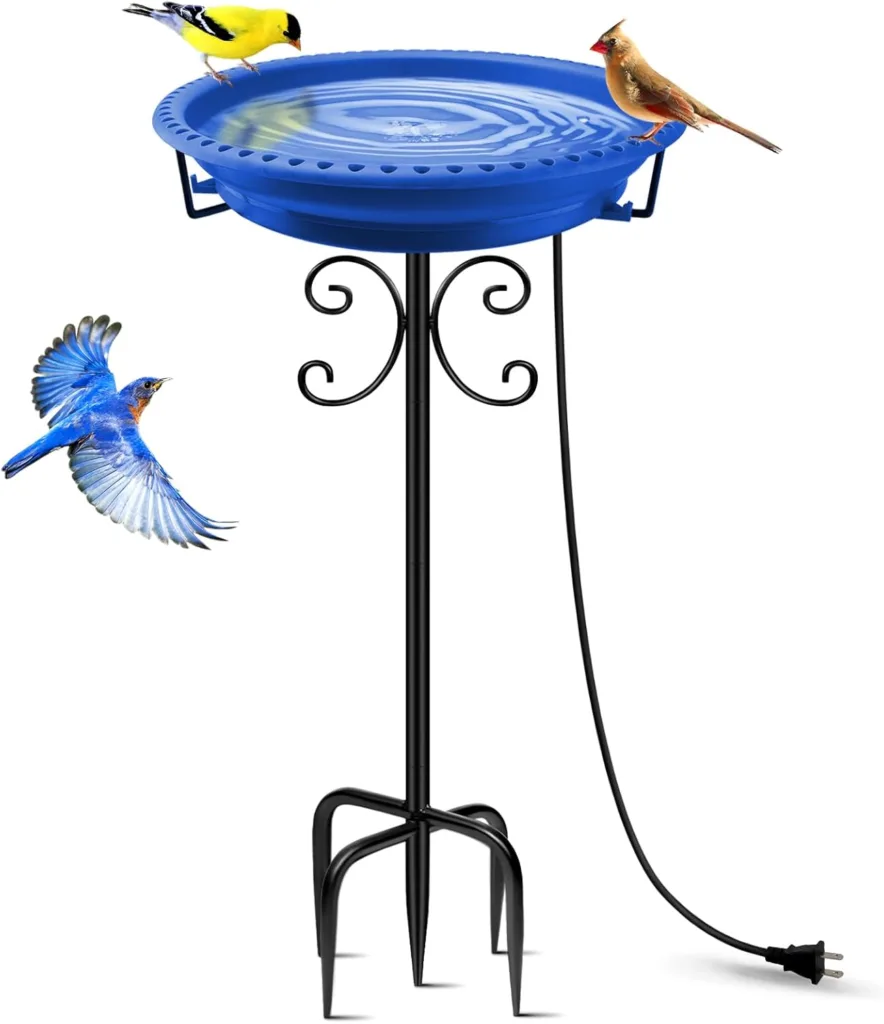
Heated bird baths are designed to maintain a safe water temperature without overheating, typically using low-wattage heating elements. This ensures that the water remains accessible while still feeling natural to birds. One of the most noticeable benefits is consistency—birds quickly learn where dependable water sources are located and will return daily, often at predictable times. This can create a more structured and rewarding birdwatching routine.
Placement remains important even in winter conditions. Positioning the bath in a sheltered area can help reduce heat loss and protect it from strong winds, while still keeping it visible enough for birds to locate. Ensuring that any electrical components are safely installed and weather-protected is essential for both safety and reliability.
If you’re serious about year-round birdwatching, a heated bird bath is not just an upgrade—it’s a commitment to supporting birds when they need it most, and the increased activity you’ll observe makes it well worth the effort.
7. Multi-Level Bird Bath for Different Species
A multi-level bird bath is an excellent choice if your goal is to attract a wider variety of bird species and accommodate different behaviors within a single setup. One of the key insights from observing bird activity is that not all birds interact with water in the same way. Some prefer shallow edges where they can cautiously sip, while others enjoy slightly deeper areas where they can fully bathe. Larger birds, on the other hand, require more space and stability. A multi-level design addresses all of these needs by offering a range of depths and surfaces within one cohesive structure.
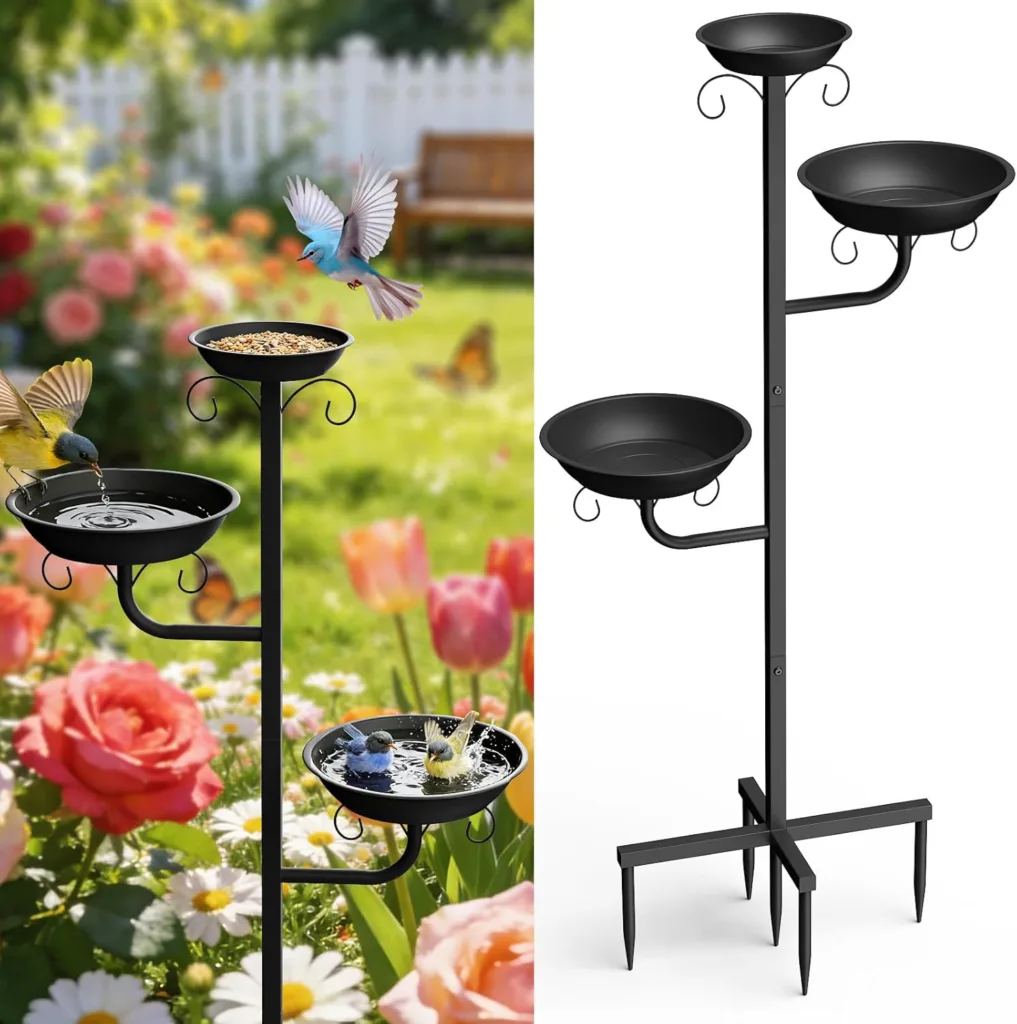
These baths often feature tiered sections, sloped basins, or built-in perches that create multiple access points. This diversity makes the bath more inviting and reduces competition between species, allowing several birds to use it simultaneously. From what I’ve seen in both backyard setups and community feedback, multi-level baths tend to encourage longer visits, as birds feel more comfortable finding a spot that suits their preferences.
However, this increased complexity does come with some trade-offs. Cleaning can be more time-consuming, as debris may accumulate in different sections, and maintaining consistent water levels across tiers requires a bit more attention. Despite this, the benefits often outweigh the extra effort, especially if you enjoy observing a variety of bird interactions.
For birders who already have an active backyard and want to take things a step further, a multi-level bird bath provides a dynamic and inclusive environment that supports a broader range of species and behaviors.
8. Drip Water Feature (Simple but Powerful)
Sometimes the most effective improvements are also the simplest, and adding a drip feature to your bird bath is a perfect example of this. Birds are highly attuned to the sound and movement of water, and even a slow, steady drip can dramatically increase the attractiveness of your setup. Unlike more complex fountain systems, a drip feature is easy to install and works with virtually any type of bird bath, making it one of the most accessible upgrades available.
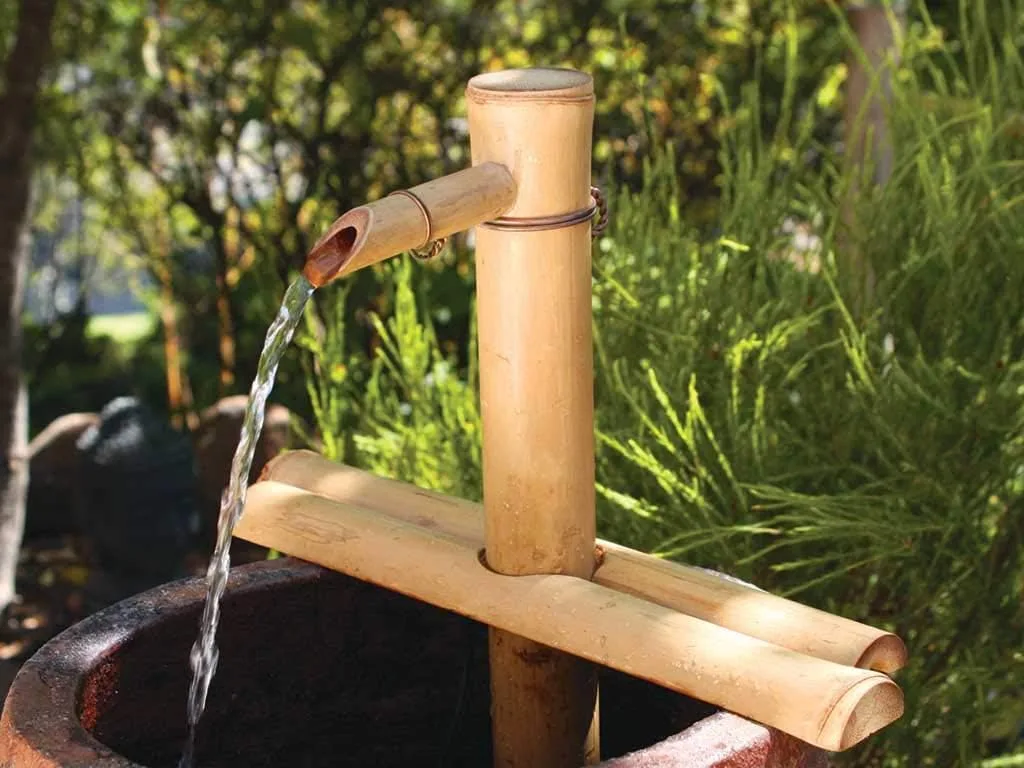
The reason this works so well comes down to instinct. In the wild, dripping water often indicates a fresh and continuously replenished source, such as rainwater collecting on leaves or water seeping from natural formations. This signals safety and reliability to birds, encouraging them to approach and investigate. From what I’ve seen across various birding discussions and personal observations, adding a drip can lead to faster discovery of your bath and more frequent visits over time.
There are multiple ways to create this effect. You can use a simple attachment connected to a garden hose or set up a DIY system using a container that slowly releases water. The key is to maintain a gentle, consistent flow rather than a strong stream, which could startle birds.
In addition to attracting birds, the constant movement helps keep the water fresher by preventing stagnation. For such a small adjustment, the impact can be surprisingly significant, making it one of the most recommended enhancements for any bird bath setup.
9. Bird Bath with Shelter Integration
One of the most overlooked aspects of a successful bird bath setup is the sense of safety it provides. Birds are naturally cautious, and their willingness to use a water source depends heavily on how secure they feel in the surrounding environment. Integrating your bird bath with nearby shelter—such as shrubs, small trees, or natural landscaping—can make a dramatic difference in both the frequency and duration of visits. From what I’ve observed and gathered through various birding experiences, birds are far more likely to relax, bathe, and return regularly when they have quick access to cover.
The key is finding the right balance. Shelter should be close enough to offer an immediate escape route, but not so close that it creates hiding spots for predators. A distance of roughly 1–3 meters (3–10 feet) from dense cover is often ideal. This allows birds to scan their surroundings while still feeling protected. Open visibility combined with accessible refuge creates a sense of controlled safety, which is exactly what birds look for.
Adding natural elements like low branches, rocks, or even decorative structures can further enhance this setup. These features provide additional perching options and help birds approach the water gradually rather than landing directly in it. This kind of environment encourages more natural behavior and longer visits.
If your current bird bath isn’t attracting as many birds as you’d like, adjusting the surrounding environment might be more effective than changing the bath itself. Safety, more than anything else, determines whether birds will trust and consistently use your water source.
10. Smart Bird Bath Setup (Combining Everything)
The most successful bird bath setups aren’t defined by a single feature but by how well multiple elements work together to create a consistent and inviting environment. Over time, one pattern becomes clear: birds respond to reliability, safety, and subtle natural cues rather than complex or decorative designs. A smart bird bath setup brings together the most effective aspects discussed throughout this guide, creating a space that birds not only visit but depend on.
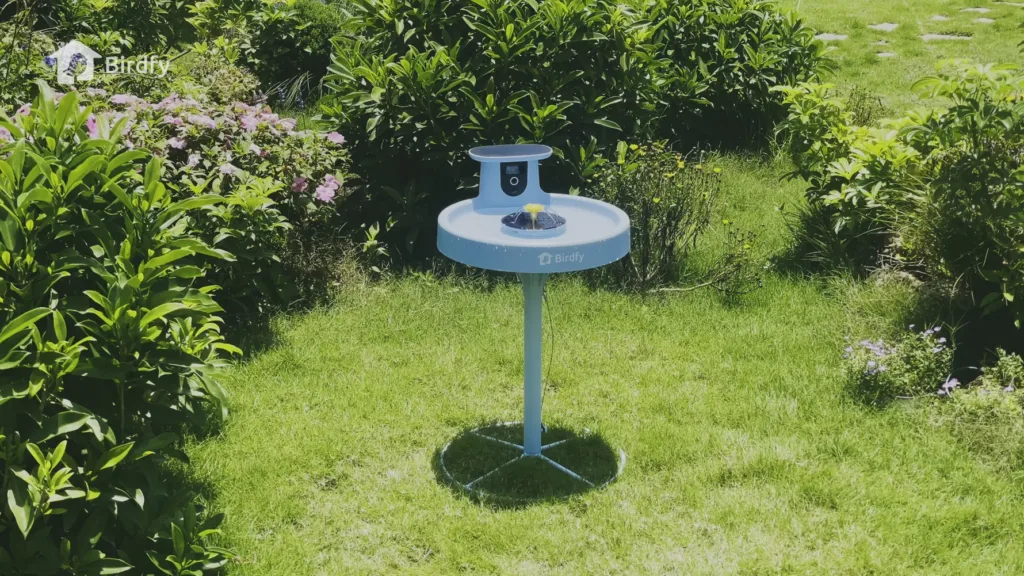
At its core, this means maintaining clean, shallow water that is easy for birds to access. Adding gentle movement—whether through a solar fountain or a drip feature—enhances visibility and attraction. Thoughtful placement near, but not too close to, shelter ensures that birds feel secure without increasing risk. Regular maintenance, including cleaning and refilling, reinforces the reliability of the water source, which is crucial for building consistent bird activity.
Many experienced birders also combine their bird bath with feeders to create a more complete backyard ecosystem. This encourages natural movement between feeding, drinking, and resting areas, resulting in more dynamic and engaging bird behavior. Over time, birds begin to recognize your yard as a dependable resource, returning frequently and often bringing others with them.
The most important takeaway is that success doesn’t come from complexity—it comes from consistency and observation. By starting simple and gradually refining your setup based on how birds respond, you can create a bird bath environment that is both effective and deeply rewarding to watch.
Final Thoughts: What Actually Matters Most
After exploring different bird bath styles, setups, and real-world experiences, one thing becomes clear: birds are not interested in how a bird bath looks to us—they care about how it works for them. Safety, accessibility, and consistency are the three factors that determine whether a bird bath becomes a central part of your backyard ecosystem or remains largely unused. Even the most beautifully designed bath will fail to attract birds if it doesn’t meet these basic needs.
If you’re starting from scratch, it’s best to focus on simplicity. A shallow, stable water source placed in a safe and visible location will always outperform a more complex setup that lacks proper placement or maintenance. From there, small improvements—such as adding movement, adjusting the surrounding environment, or experimenting with different locations—can significantly enhance results over time. Observing how birds interact with your setup is one of the most valuable tools you have, allowing you to make informed adjustments that align with their natural behavior.
What makes bird baths truly special is not just the number of birds they attract, but the patterns they create. Birds begin to return at certain times of day, interact with each other, and even establish routines around your water source. This transforms your backyard into something more than just a viewing space—it becomes part of their daily lives.
Note: This article may contain affiliate links. This means that if you click on a link and make a purchase, GoToBirding may earn a small commission at no extra cost to you. I only recommend products and ideas I believe can genuinely improve your backyard birding experience and help you attract more birds naturally..
Lorand Vigh is a nature conservation professional and lifelong birder based in Serbia (Vojvodina). With over 30 years of field experience in birdwatching, habitat protection, and conservation management, he has worked on bird monitoring projects, habitat restoration initiatives, and cross-border conservation cooperation. GoToBirding is a personal project built on real field experience, sharing practical, science-based advice for birders and wildlife photographers.