
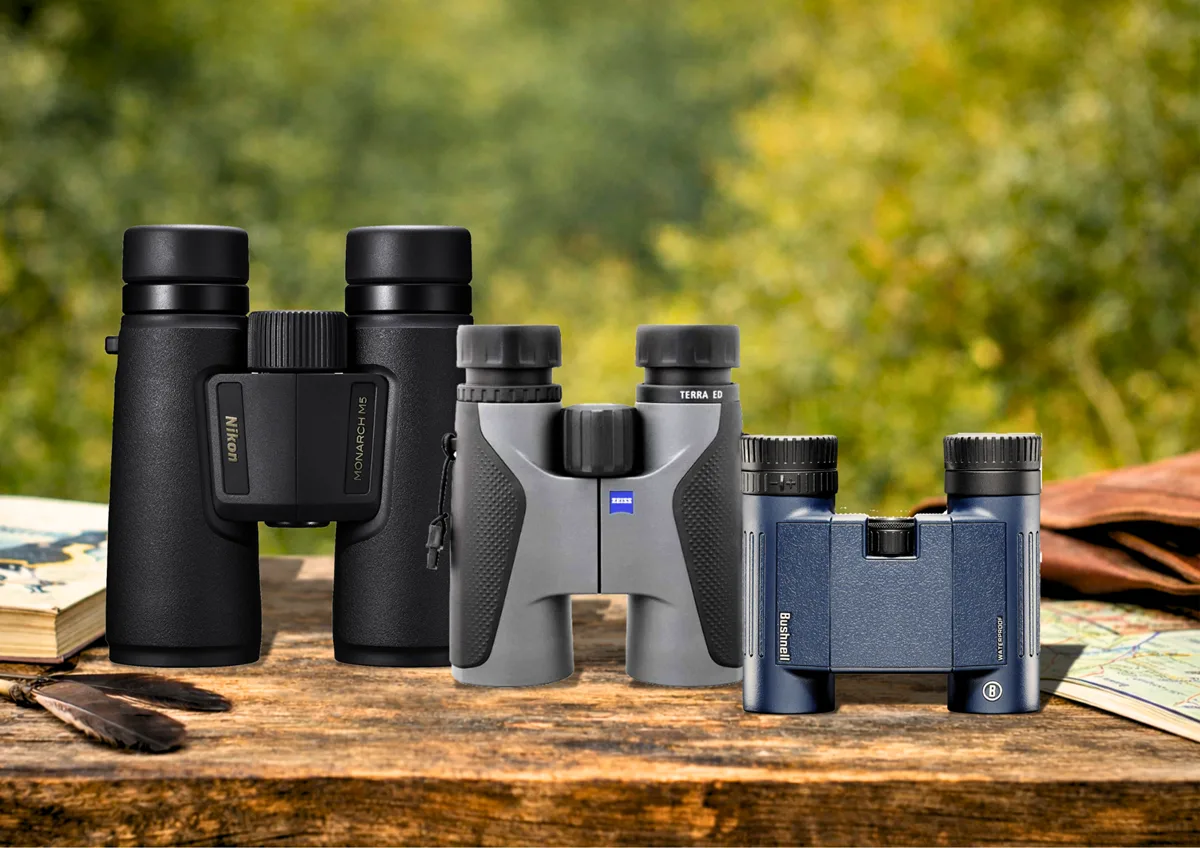
Why Choosing the Right Binoculars Matters More Than You Think?
Birdwatching often looks like a simple hobby from the outside. You lift binoculars to your eyes, focus, and enjoy the view. But anyone who has spent real time in the field knows that the quality of your binoculars deeply affects how much you see, how long you can stay comfortable, and ultimately how much joy you get from birding.
Over the years, through my own use in different environments and by carefully studying long-term reviews from experienced birders, wildlife photographers, and optics specialists, I have learned that choosing binoculars is not about chasing specifications. It is about finding the right balance between optics, comfort, weight, and how you actually spend your time outdoors.
I have owned and used binoculars that looked perfect on paper but failed to inspire confidence in real-world conditions. I have also used simpler models that felt so natural and comfortable that I ended up seeing more birds simply because I enjoyed using them. These experiences shaped the way I look at binoculars today.
This article is written as an honest, experience-based guide. It is not about pushing one “best” model. Instead, it is about helping you understand the three main binocular categories used in birdwatching: full-sized, compact, and pocket-sized, and clearly explaining what each category does well, where it struggles, and who it is best suited for.
If you understand these differences, choosing binoculars becomes far easier and far less stressful.
Affiliate Disclosure
Some of the links in this article are affiliate links. If you make a purchase through these links, I may earn a small commission at no extra cost to you. This helps support this site and allows to continue providing honest reviews and birdwatching guides.
Bringing the Categories Together
Size as the Starting Point
When different ways of classifying binoculars are compared, size quickly becomes the most practical reference. Binoculars like entry-level, high-quality, lightweight, or premium are helpful, but they often overlap in terms. What really shapes the experience is how these qualities are expressed within the three main size categories: full-sized, compact, and pocket-sized binoculars.
How Full-Sized, Compact, and Pocket Models Combine Priorities
Full-sized binoculars usually bring together the strongest mix of optical performance and comfort. This is where higher-end glass, better low-light ability, and relaxed viewing are most common. As a result, they often sit in the mid-range to premium categories and suit birders who spend long hours observing in varied conditions.
Compact binoculars act as a bridge between performance and portability. They appear across entry-level, mid-range, and premium ranges, showing how categories naturally overlap. A good compact model can feel lightweight and easy to carry while still delivering sharp, high-quality views, making it a favorite for active birders who move a lot.
Pocket binoculars focus on maximum portability. They bring together lightweight design and everyday convenience, sometimes at the expense of brightness or long-viewing comfort. These models often fit best as travel companions, backup binoculars, or quick-grab options, where ease of carrying matters more than top-tier optical performance.
Seen together, these three size categories help organize all other classifications. Instead of competing with each other, they highlight different priorities. Understanding how full-sized, compact, and pocket binoculars naturally combine various features makes it easier to choose a model that truly matches your birding style and habits.
How I Evaluate Binoculars for Birdwatching
Before comparing categories, it is important to explain how I personally evaluate binoculars for birdwatching. My approach combines direct field use with careful long-term research. I pay close attention to recurring feedback from experienced users, not just first impressions.
What matters most to me is how binoculars perform in real birding situations. That means early mornings with low light, shaded forests, windy coastlines, and long walks where comfort matters just as much as image quality.
I focus on optical clarity, contrast, color accuracy, ease of focusing, and how forgiving the binoculars are with eye placement. I also pay close attention to fatigue. If binoculars feel tiring after an hour, that matters more than a slight improvement in sharpness.
With that perspective in mind, let’s look closely at each binocular category.
Full-Sized Binoculars for Birdwatching
Full-sized binoculars are generally defined as models with objective lenses of 42mm or larger, with the most common configurations being 8×42 and 10×42. These binoculars have long been considered the standard in birdwatching optics because they provide a combination of brightness, clarity, and comfort that smaller binoculars cannot fully match. From my experience, full-sized binoculars represent the pinnacle of versatility; they perform reliably across a wide range of environments. Their larger lenses allow for more light to enter the optics, which fundamentally enhances the viewing experience.
Optical Performance and Image Quality
The defining characteristic of full-sized binoculars is their superior optical performance. Thanks to the larger objective lenses, these binoculars gather significantly more light than compact or pocket-sized alternatives. This translates into brighter, sharper images, with excellent contrast and clarity, particularly in low-light conditions such as early morning or overcast afternoons. When I use 8×42 or 10×42 binoculars in forested areas or during migration periods, I consistently notice how much more detail is visible compared to smaller models. Plumage patterns, subtle color variations, and even the slightest movements are easier to detect. It makes identification faster and more accurate.
Color reproduction with full-sized binoculars often appears more natural and vivid. Birds stand out against complex backgrounds such as reeds, tree canopies, or shadowed understories. The ability to perceive fine feather textures and natural hues not only improves identification but also enhances the overall enjoyment of birding. I often recommend paying attention to high-quality lens coatings and prisms, as these significantly contribute to image sharpness, color fidelity, and reduced glare.
Comfort During Long Observation Sessions
Another substantial advantage of full-sized binoculars is comfort, especially during prolonged observation periods. The larger exit pupil typical of these models allows for more forgiving eye placement, which reduces eye strain and makes extended viewing sessions more comfortable. From my perspective, this factor is as important as optical quality; a pair of binoculars that tires your eyes quickly can diminish the joy of birding, no matter how sharp the optics are. Full-sized binoculars excel in scenarios that require sustained attention, such as tracking bird movements in migration or scanning large wetland areas.
The ergonomics of full-sized models also contribute to comfort. Many feature a well-balanced design, rubberized grips, and smooth focus wheels that can be operated easily even while wearing gloves. During multi-hour excursions, the tactile feel and balance of a quality full-sized binocular can make a noticeable difference in reducing hand fatigue.
Weight and Handling Considerations
The primary drawback of full-sized binoculars is their weight. Most models range from 650 to 850 grams, making them noticeably heavier than compact alternatives. While this weight is not an issue for short walks or stationary observation points, it can become challenging during long hikes or when carrying multiple pieces of equipment. In my experience, investing in a sturdy neck strap or a harness system alleviates much of this strain, distributing the weight across your torso and keeping your hands free for other tasks.
Despite the additional weight, many birders — including myself — consider this a reasonable trade-off for the improved optical performance, comfort, and versatility. With proper handling and support, full-sized binoculars remain practical for all-day use.
Who Full-Sized Binoculars Are Best For
Full-sized binoculars are ideally suited for birders who treat birdwatching as a primary outdoor activity. They are particularly effective for forest birding, wetland observation, migration monitoring, and any setting where lighting conditions vary throughout the day. The combination of brightness, clarity, and comfort makes them the preferred choice for those who spend significant time in the field and want a single pair of binoculars capable of performing well in virtually any situation.
From my long-term perspective and careful review of professional feedback, full-sized binoculars represent the gold standard for serious birders. If you prioritize optical quality and observation comfort over minimal weight, and you want a versatile, reliable tool for extended birding sessions, this category is the optimal choice. For dedicated birdwatchers, investing in a high-quality full-sized pair is often the most rewarding decision for both immediate enjoyment and long-term use.
Full-Sized Binoculars: Examples
Among full-sized binoculars, a few models consistently stand out for combining strong optical performance with comfortable, practical design.
Nikon Monarch 5 8×42
The Nikon Monarch 5 8×42 is a great example of this balance. It is a full-sized binocular that strikes a very effective balance between optical quality, comfort, and real-world usability. In the field, it delivers a bright, clean image with natural color rendering, helped by ED glass that keeps color fringing well under control. I’ve found it particularly dependable in mixed lighting, such as shaded woodland paths or during early morning birding, where consistent clarity makes observation more relaxed. One of the Monarch M5’s strengths is its wide, stable view. Tracking moving birds feels intuitive, and the generous field of view makes it easier to follow activity without constantly re-centering the image. The focus wheel is smooth and precise, allowing quick adjustments, while the close-focusing ability adds versatility when observing birds at short distances or studying fine details.
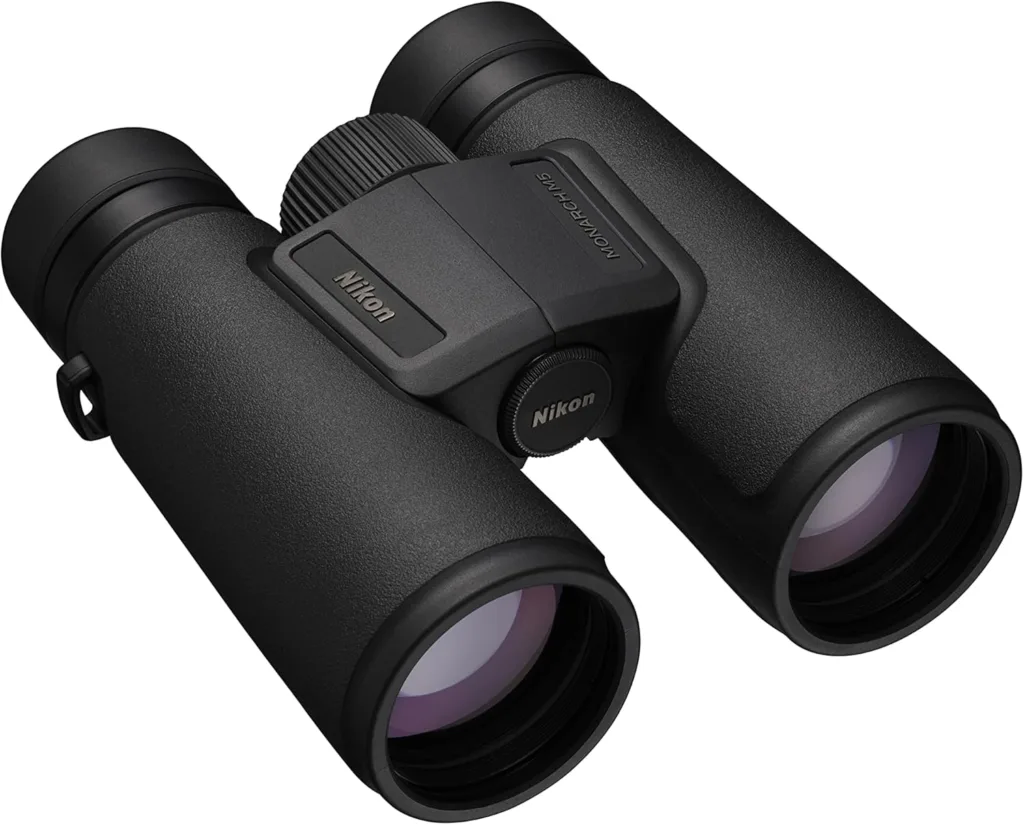
Comfort and durability are clearly part of the design. The rubber-armored body provides a secure grip, and the waterproof, fogproof construction holds up well in changing weather. The adjustable eyecups and long eye relief make extended use comfortable, even for eyeglass wearers. For birders looking for a reliable, well-rounded full-sized binocular that performs consistently across a wide range of conditions without moving into premium price territory, the Monarch M5 8×42 remains a very solid choice.
Swarovski Optic EL 10×42
At the higher end, the Swarovski Optic EL 10×42 offers a noticeably refined viewing experience. It sits firmly at the top end of full-sized binoculars, both in terms of optical performance and overall refinement. In use, the image is exceptionally clean and detailed, with sharpness that extends right to the edges of the field of view. Colors appear natural and well balanced, and the level of detail visible at distance makes it easier to study birds in flight or perched far across open landscapes. The 10x magnification, combined with the large field of view, creates a viewing experience that feels both immersive and controlled. Even in lower light, the image remains bright and stable, helped by the efficient light transmission and comfortable exit pupil. I’ve found this especially valuable during early mornings or when watching movement at the edges of daylight, where lesser optics begin to struggle.
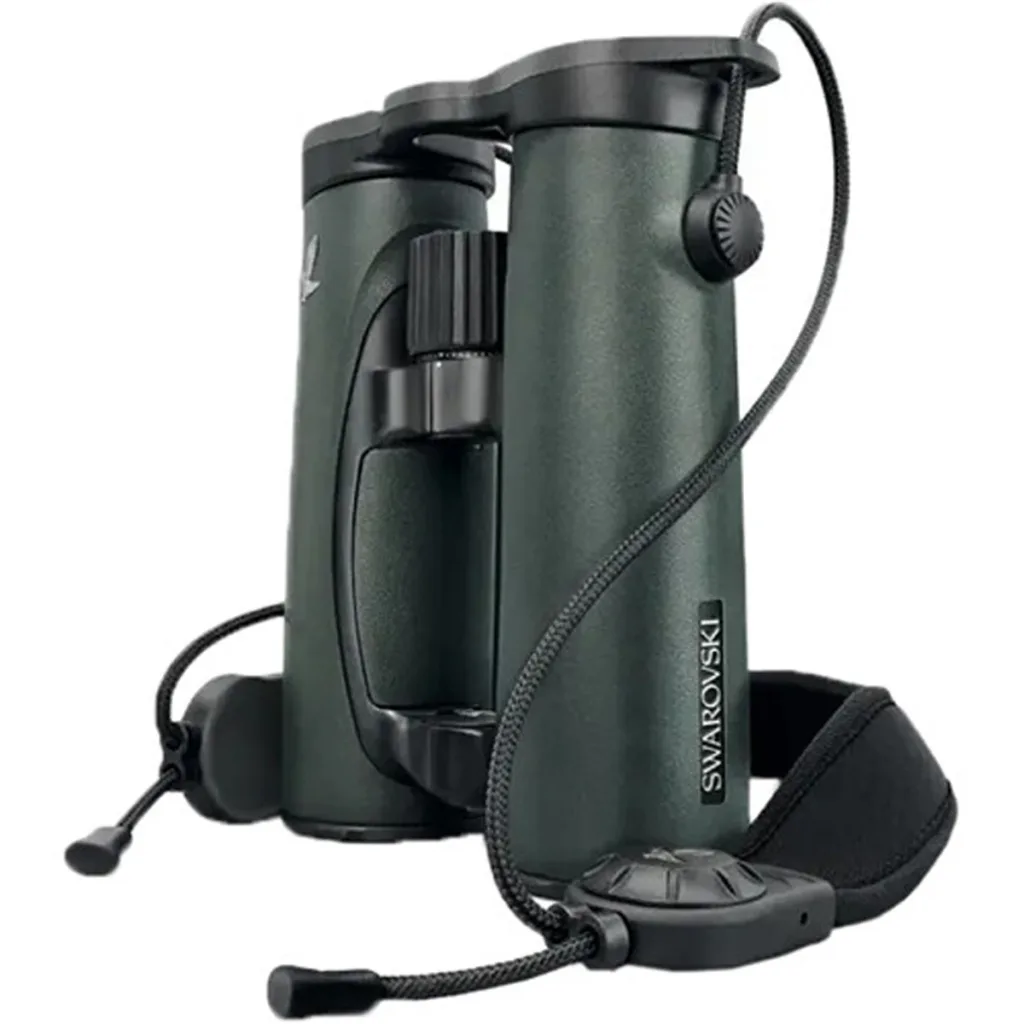
Beyond image quality, the EL 10×42 feels built for serious, long-term use. The magnesium-alloy housing is solid without being unwieldy, and the weather-sealed construction inspires confidence in harsh or unpredictable conditions. The rubber armor provides a secure grip and effective protection in the field. For birders who value precision, durability, and a truly refined viewing experience—and are willing to invest accordingly—the Swarovski EL 10×42 remains a benchmark against which many others are measured.
Vortex Viper HD 8×42
The Vortex Viper HD 8×42 sits comfortably between these two extremes. It is a full-sized binocular that feels designed for long days outdoors and varied conditions. In use, it delivers a bright, sharp image with good edge-to-edge clarity, even when light starts to drop. I’ve found its optical performance particularly reliable in open habitats, where scanning wider areas and following moving birds benefits from both brightness and a generous field of view. Handling is one of the Viper HD’s strengths. The rubber-armored body sits securely in the hands, and the thumb indents make it easy to hold steady during extended viewing. Focusing is smooth and precise, allowing quick adjustments when birds shift position, while the locking diopter helps keep the image properly set once adjusted. The eyecups are comfortable and easy to position, which contributes to a relaxed viewing experience over longer sessions.
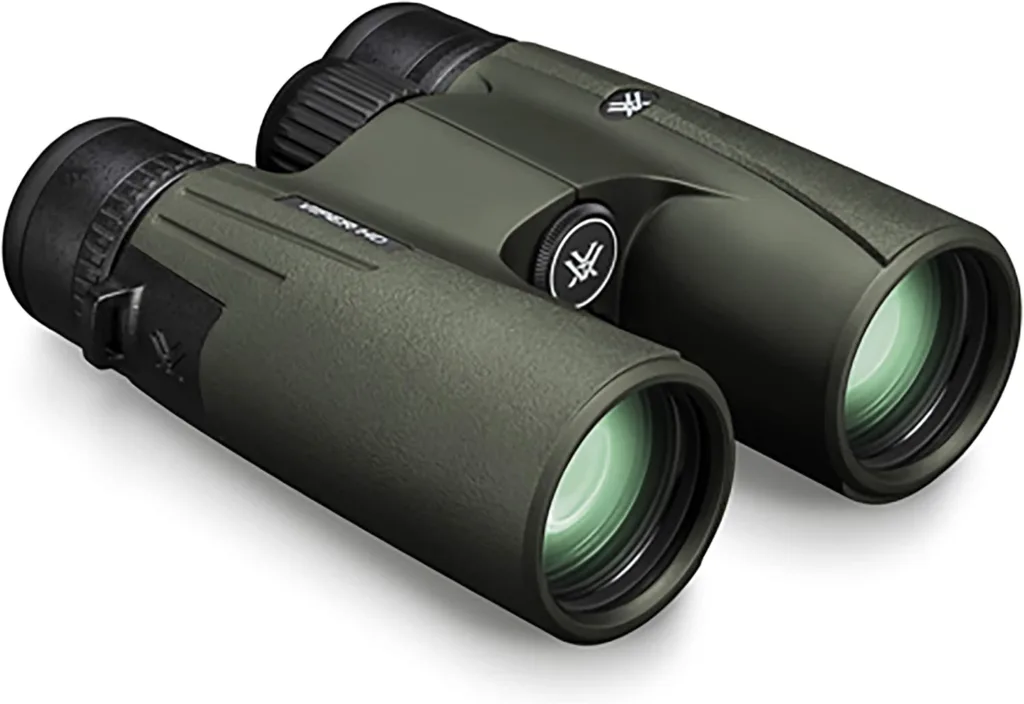
Durability is another area where the Viper HD inspires confidence. The waterproof and fogproof construction handles changing weather without issue, and the protective lens coatings help keep the glass clean and scratch-free in real field use. Paired with the chest harness, it carries comfortably and stays ready for quick access. For birders looking for a robust, well-rounded full-sized binocular with strong low-light performance and practical ergonomics, the Viper HD 8×42 remains a very solid choice.
Compact Binoculars for Birdwatching
Compact binoculars are defined by their smaller objective lenses, usually between 25mm and 32mm, with 8×32 being the most frequently recommended configuration. Unlike full-sized binoculars, which prioritize maximum light gathering and extended viewing comfort, compact binoculars are engineered to deliver strong optical performance while reducing bulk. When I first approached this category, I assumed the smaller lenses would automatically compromise image quality. However, through years of practical use, as well as analyzing long-term professional reviews, I discovered that many modern compact models provide clarity, color fidelity, and detail that rival older full-sized designs. The technology behind prisms, lens coatings, and optical glass has improved to the point where a well-made 8×32 can deliver impressive results in a wide range of birding scenarios.
One of the most striking aspects of compact binoculars is their adaptability. They perform particularly well in environments where mobility is essential, such as narrow forest trails, rocky shorelines, or crowded birding festivals. The reduced size encourages more spontaneous observations because you can keep them ready and accessible at all times without the fatigue that heavier optics can produce.
Optical Performance in Daylight Conditions
In daylight conditions, compact binoculars excel. Modern glass, multi-layer coatings, and high-quality prisms ensure that images are sharp, with good contrast and accurate color reproduction. When using a 32mm model during midday birding, I frequently find myself surprised at the level of detail that can be discerned, from subtle feather patterns to delicate variations in wing coloration. In practical terms, the difference between a well-made compact and a full-sized 42mm model is often smaller than one might expect, especially in bright conditions where the light-gathering advantage of larger lenses is less critical.
For birders who primarily observe in open or sunlit environments, compact binoculars can deliver excellent performance without imposing the weight and bulk of a full-sized pair. Additionally, because they are easier to handle, small adjustments and tracking moving birds can feel more natural and immediate, which can be crucial when observing quick species like warblers or swifts.
Trade-Offs in Low Light
The main limitation of compact binoculars arises in low-light conditions, such as dawn, dusk, or heavily shaded areas of forest. The smaller objective lenses inherently gather less light, which can make the image appear dimmer and slightly less forgiving to the eye. I have noticed that when scanning dense woodland during the early morning, the difference in brightness between a compact and a full-sized binocular is tangible, particularly when trying to spot subtle movements in underbrush or identify fine plumage details.
However, this limitation is not necessarily a deal-breaker. Many birders, including myself, accept the reduced low-light performance as a fair trade for the portability and convenience that compact binoculars provide. For most birding situations, especially during daylight hours or in open habitats, compact binoculars perform admirably.
Comfort and Portability
Where compact binoculars truly shine is in their portability. They are lighter, smaller, and easier to maneuver, making them ideal for all-day hikes, travel, or situations where every ounce of weight matters. In my own experience, the difference in fatigue when carrying a compact pair versus a full-sized model over several hours is substantial. The binoculars can be worn around the neck or slung across the shoulder with minimal discomfort, allowing for a more fluid and continuous birding experience.
Ergonomically, compact binoculars are designed to be quick to raise and simple to operate. Their smaller footprint allows for rapid acquisition of birds in motion, and the focus wheels on quality models are smooth enough to adjust on the fly. For active birders who move frequently, this ease of use can make a significant difference in both enjoyment and effectiveness.
Who Compact Binoculars Are Best For
Compact binoculars are best suited for birders who prioritize mobility and versatility. They are excellent for travelers, hikers, and anyone who needs a balance between optical performance and portability. For instance, a birder exploring remote wetlands or mountainous regions can cover more ground comfortably without sacrificing too much image quality. They also work well as a primary tool for casual birders who prefer not to carry heavier equipment but still desire a clear, detailed view.
From my long-term perspective, compact binoculars strike a practical compromise. They allow birders to maintain high-quality observation while reducing the physical demands of carrying optics. For many modern birders, this category represents a flexible, realistic choice that accommodates both everyday birdwatching and extended trips into varied terrain.
Compact Binoculars: Examples
Zeiss Terra ED 8×32
The Zeiss Terra ED 8×32 is a compact binocular that feels purpose-built for active birders who want reliable performance without unnecessary bulk. In use, it delivers a bright, clean image with strong contrast, helped by the ED glass and ZEISS coatings that keep colors natural and details well defined. In good daylight, the view feels open and sharp, and even in more difficult light, the image holds together better than many binoculars in this size class.
One of the first things you notice is the focusing. The large focus wheel is easy to find without looking, and adjustments are quick and precise. I’ve found this especially useful when birds appear suddenly or move quickly through vegetation, where fast, confident focusing makes a real difference. The ergonomics feel intuitive, allowing you to concentrate on the bird rather than the binoculars in your hands.
The Terra ED is also built to handle real outdoor use. Its compact, lightweight body fits easily into a backpack, and the reinforced, waterproof housing feels solid without being heavy. The lens coatings shed water and dirt effectively, which helps maintain a clear view in wet or changing weather. For birders who spend a lot of time moving, traveling, or birding in unpredictable conditions, the ZEISS Terra ED 8×32 is a dependable, well-balanced option that combines clarity, speed, and durability.

Hawke Vantage 8×32
The Hawke Vantage 8×32 is a versatile compact binocular that offers a surprisingly capable viewing experience for its size and price. In my experience, it works particularly well for travel birding, where weight and space matter and carrying larger binoculars quickly becomes a burden. Despite its compact build, the image remains bright and clear in daylight, with good contrast that makes small birds and subtle markings easy to follow. One of its strengths is the wide 7.5-degree field of view, which gives a more open, relaxed image and helps when tracking active birds. The fully multi-coated lenses contribute to solid clarity and color reproduction, and the waterproof construction adds peace of mind when birding in unpredictable weather. At just under 15 ounces, it feels light in the hands and comfortable to carry for extended periods, whether on a hike, a casual walk, or while exploring nature reserves.
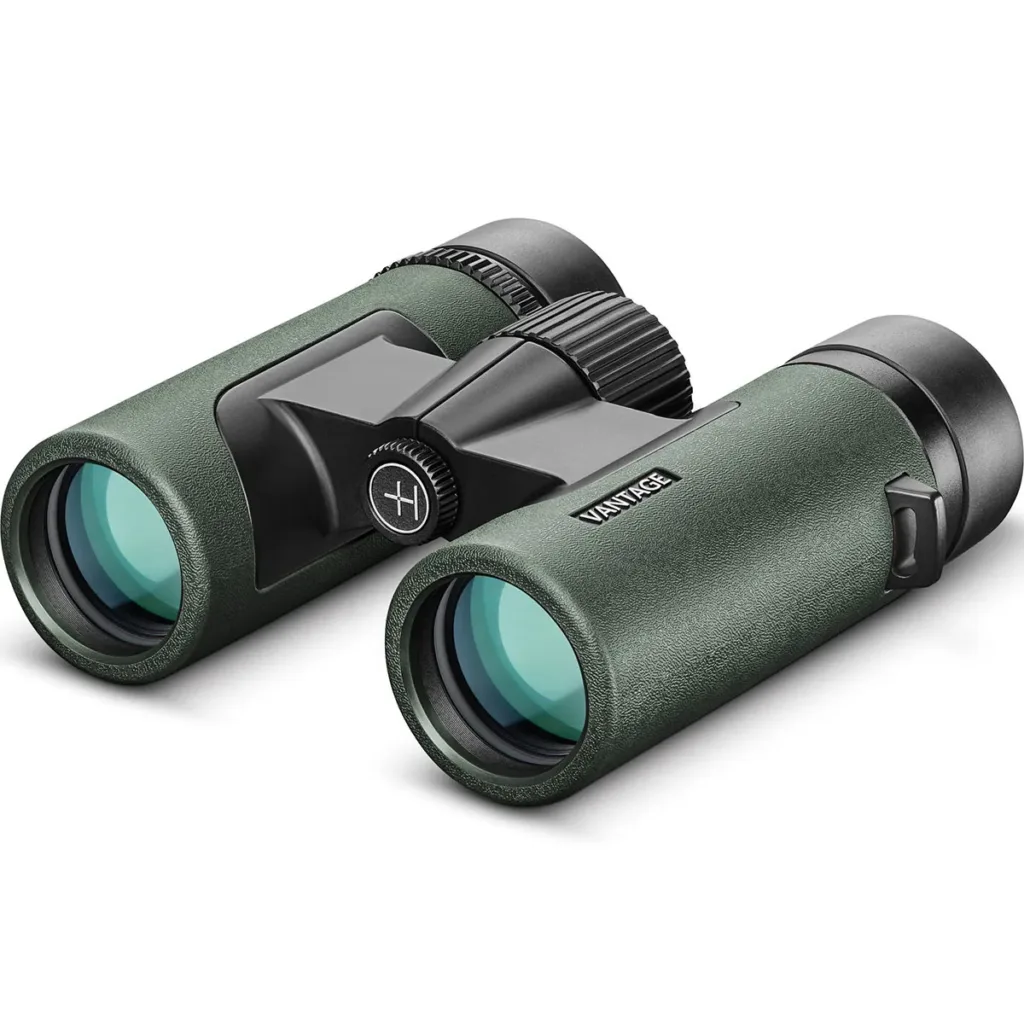
While it’s not designed to compete with premium optics, the Hawke Vantage 8×32 delivers dependable performance where it counts. For birders looking for an affordable, lightweight binocular that still offers a wide view and reliable image quality, it remains a very sensible and approachable option.
Nikon PROSTAFF P3 8×30
The Nikon PROSTAFF P3 8×30 is a compact binocular that reflects Nikon’s long-standing approach to practical, well-balanced optics. In use, it feels reliable and ideal for birders moving between forests, fields, or lakes. The wide field of view makes spotting and tracking birds quick and easy. Despite the 30mm objectives, daylight images remain bright, clear, and high-contrast, with minimal glare thanks to Nikon’s multilayer coatings. Adjustable eyecups and generous eye relief make it comfortable for extended use, with or without glasses. The rubber-armored body provides a secure grip, and the waterproof, fogproof construction makes it reliable in changing weather conditions.
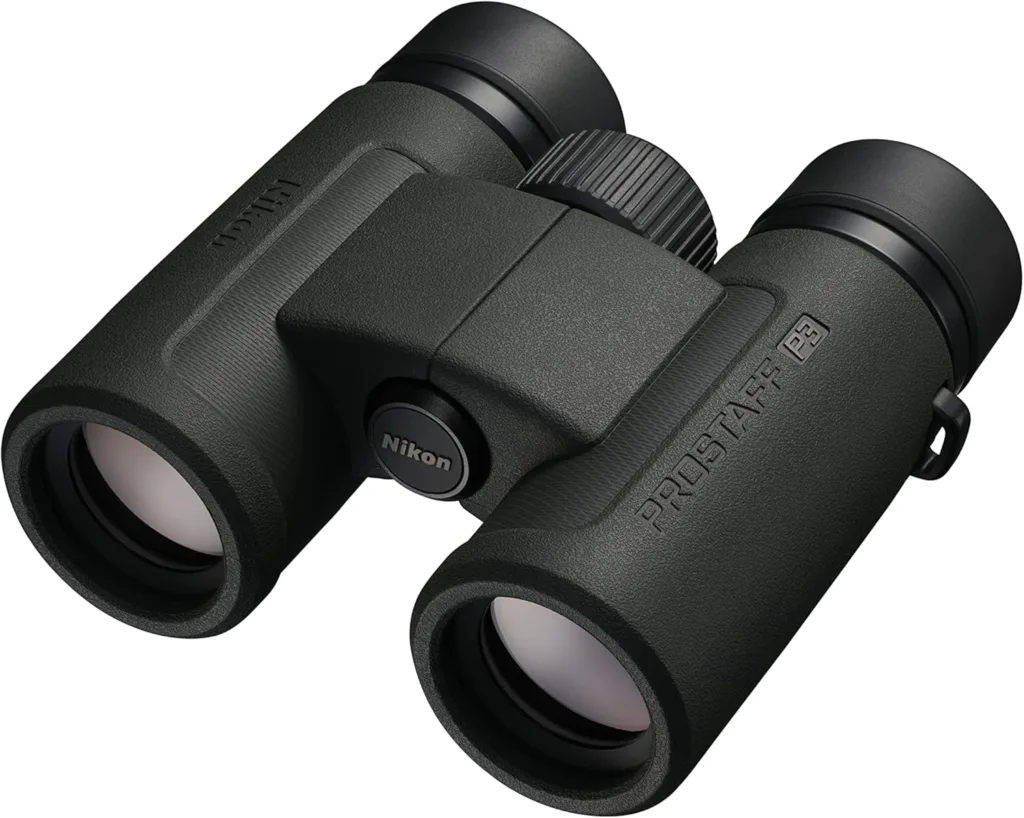
At just under 17 ounces, the PROSTAFF P3 is easy to carry and doesn’t add noticeable fatigue, even on longer outings. It fits naturally into a backpack or day bag and feels ready for spontaneous birding as well as planned sessions. For birders looking for a compact, durable binocular that offers a wide, relaxed view and consistent performance without stepping into higher price tiers, it’s a very sensible and versatile choice.
Pocket-Sized Binoculars for Birdwatching
Pocket binoculars are engineered for maximum portability, typically featuring objective lenses between 20mm and 25mm. Their compact size lets them fit in a jacket, small backpack, or even a large shirt pocket, ready for unexpected birding moments. Pocket binoculars don’t match full-sized models in brightness, field of view, or extended comfort. Many think they are just smaller binoculars, but they serve a distinct purpose: a lightweight, always-available tool for spontaneous observation.
Convenience Above All Else
The defining strength of pocket binoculars is their convenience. Their small size and light weight make pocket binoculars easy to keep ready at all times. This often leads to spotting birds that might otherwise go unnoticed. On many casual walks, a quick glance through them has revealed rare or fleeting species—moments larger binoculars would have missed. The immediacy creates a more intimate, reactive birding experience. You can observe birds in the moment, without delay.
Their compact design also encourages casual use. Unlike heavier models, they never feel burdensome. Travelers, urban birders, and hikers find them a practical, versatile tool for everyday wildlife observation.
Optical and Ergonomic Limitations
Despite their convenience, pocket binoculars come with inherent limitations that define how they should be used. Smaller objective lenses gather less light, which can result in dimmer images, particularly in low-light conditions such as dawn, dusk, or shaded woodland areas. The field of view is narrower, requiring more frequent adjustments to keep moving birds in sight. Eye placement is less forgiving than with larger binoculars, demanding more precise alignment to achieve a sharp image. Long observation sessions can quickly become fatiguing, as the smaller size often means less comfortable grip, limited focus wheel precision, and increased sensitivity to hand movements.
From my perspective, these limitations are not flaws but rather indicators of the intended use. Pocket binoculars excel when quick access and portability outweigh extended viewing comfort or extreme optical performance. Recognizing this helps birders set realistic expectations and maximize the effectiveness of these compact tools. I have found that using pocket binoculars in combination with a primary pair of full-sized or compact binoculars allows a birdwatcher to enjoy the benefits of portability without compromising on detailed observation when needed.
Who Pocket Binoculars Are Best For
Pocket binoculars are most suitable for casual birdwatchers, travelers, and as a secondary pair to complement a primary binocular set. They shine when birdwatching is incidental rather than the central activity of an outing, such as during urban walks, beach trips, or quick nature hikes. For instance, while walking through a city park, a pair of pocket binoculars can reveal small passerines or waterfowl without the hassle of carrying heavier optics.
In my long-term experience, they are excellent companions for those who value readiness and accessibility over prolonged observation or maximum detail. While they are rarely ideal as a primary tool for serious fieldwork, they fill an important niche. It ensures that birding opportunities are not lost due to the impracticality of carrying larger binoculars. Ultimately, pocket binoculars provide a practical, realistic option for those who want to keep the joy of observation within immediate reach, without committing to the weight and bulk of more advanced models.
Pocket-Sized Binoculars: Examples
Bushnell H2O 8×25
The Bushnell H2O 8×25 is a pocket-sized binocular designed for birders who value portability and durability above all else. In use, it delivers a surprisingly clear and high-contrast image for its size. Quality prisms and lens coatings make it sharp and bright in good daylight, ideal for casual birdwatching. Its real strength is handling outdoor conditions. The binoculars are waterproof and fogproof, making them reliable in marshes, coastal areas, or sudden weather changes. The rubberized exterior provides a secure grip, even one-handed or in damp conditions. This makes them feel stable when many small binoculars can feel awkward.
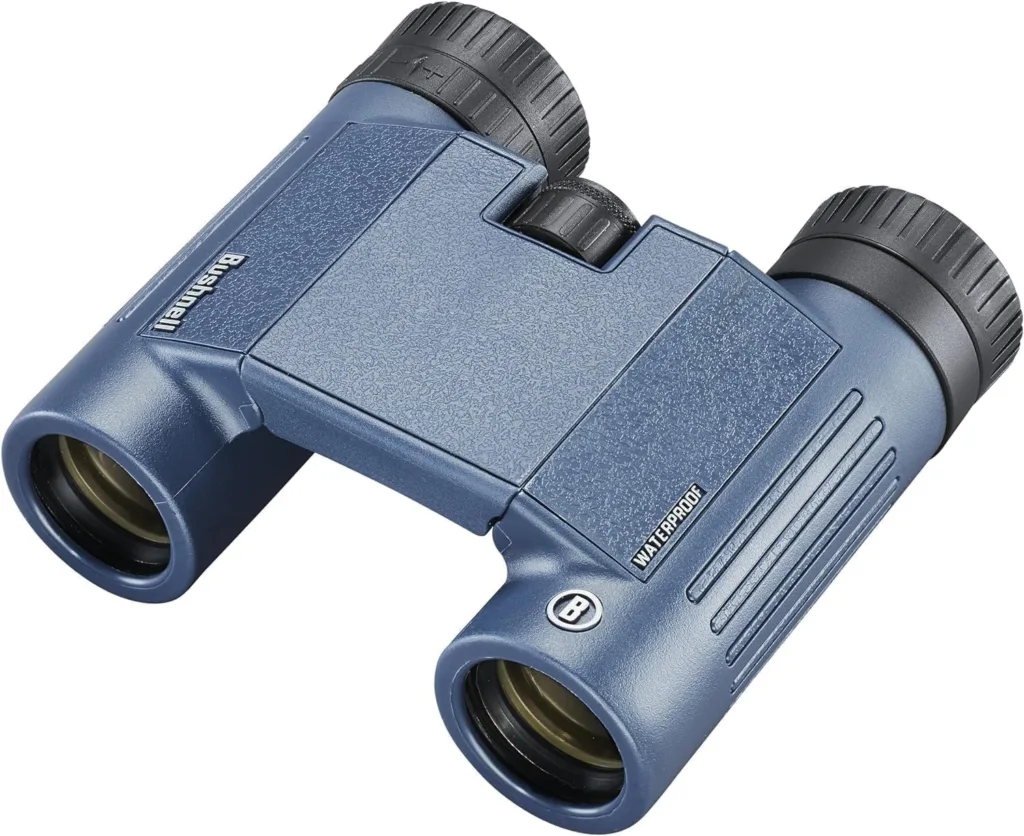
Comfort is always a challenge with pocket binoculars, but the H2O does a respectable job. The eyecups and eye relief are adequate for short to moderate viewing sessions, and the lightweight body makes it easy to carry all day without noticing it. It fits naturally into a jacket pocket or small bag and is always ready when an unexpected birding opportunity appears. As a compact, weather-resistant option for travel, hiking, or as a secondary pair, the Bushnell H2O 8×25 fills its role very well.
Zeiss Terra Pocket 8×25
The ZEISS Terra ED 8×25 is one of those pocket binoculars that immediately feels more serious than its size suggests. It is clearly designed for birders and outdoor enthusiasts who want something truly compact, but who are not willing to accept a dull or compromised image just because the binoculars are small. In use, the optical quality stands out right away, especially in good daylight, where the view feels crisp, contrasty, and well controlled. The ED glass and ZEISS coatings play an important role here. Colors appear natural and well separated, and fine details remain visible even against busy backgrounds like foliage or reeds.
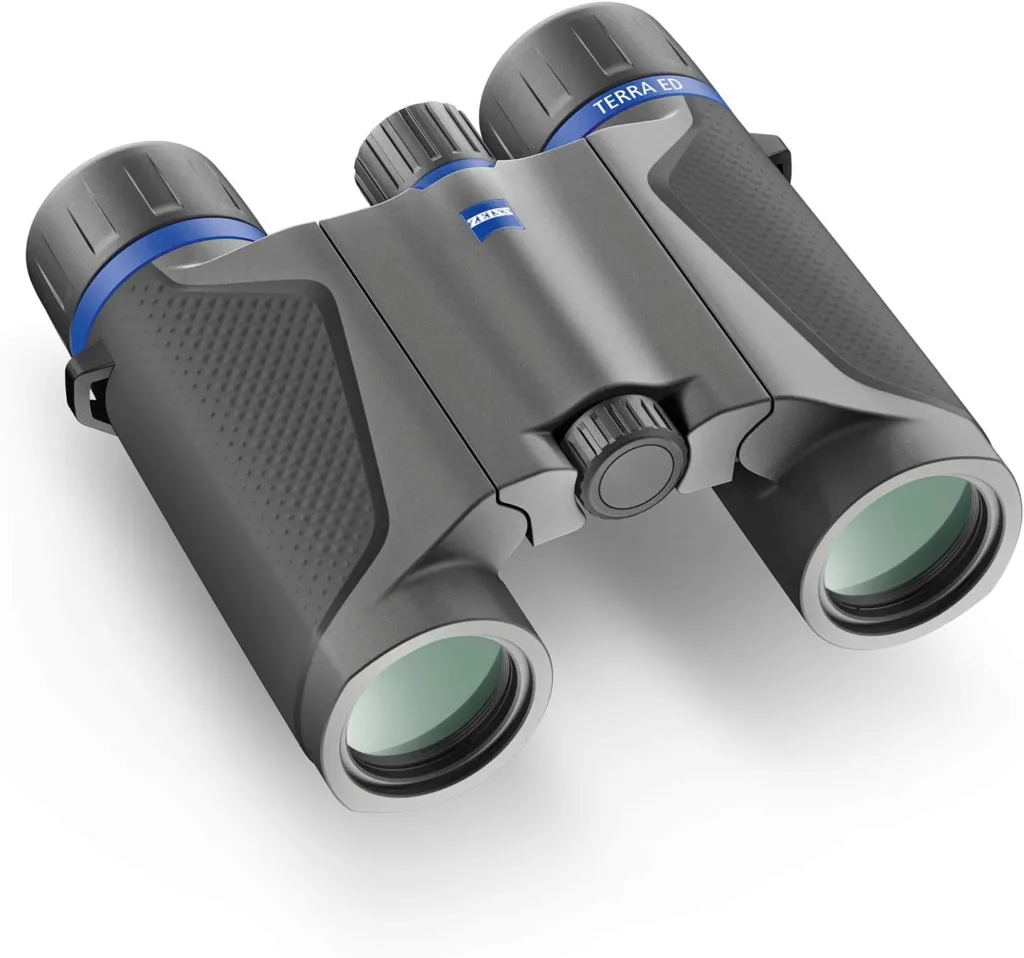
Light transmission is impressive for a pocket binocular. While it can’t match larger models in low light, it performs better than most 8×25 designs during early mornings or overcast conditions. The large, well-placed focus wheel allows quick adjustments, making it easy to track sudden or fast-moving birds. Build quality is solid, with waterproof housing and protective coatings that handle rain and moisture. It fits easily in a jacket pocket or small bag and feels durable enough for regular use.
As with any pocket binocular, long-session comfort is limited, and the narrower field of view requires more deliberate aiming. Still, the Terra ED excels in its role. For travel, casual walks, or as a backup to a main pair, it provides a refined and reliable viewing experience.
Vortex Diamondback HD 8×28
The Vortex Diamondback HD 8×28 binoculars deliver exceptional clarity and sharpness with 8x magnification and 28mm objective lenses. Built with premium glass elements, they reduce chromatic aberration and provide vibrant, true-to-life colors. Fully multi-coated lenses and dielectric coatings enhance light transmission for bright, high-contrast images, while Armortek coatings protect against scratches, dirt, and oil. Designed for comfort and ease of use, the binoculars feature twist-up eyecups for use with or without glasses, a smooth center focus wheel for quick adjustments, and a diopter on the right eyepiece to correct for differences between your eyes. Rubber armor provides a secure, non-slip grip and durable protection, and the binoculars are tripod adaptable for long viewing sessions or car window mounts.
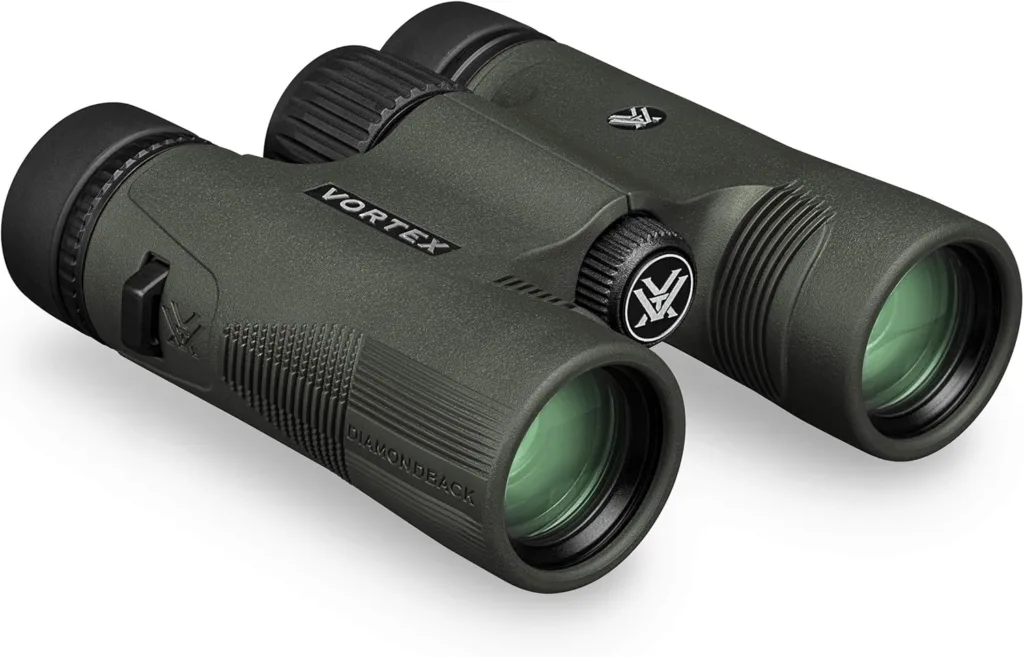
Rugged and ready for any environment, the Diamondback HD is argon-purged and O-ring sealed to ensure waterproof and fogproof performance. Built to withstand impact and recoil, they come with a carry case and are backed by Vortex’s unlimited, unconditional lifetime VIP warranty, offering repair or replacement for defects or damage.
Clearly Understanding the Differences Between Categories
The differences between full-sized, compact, and pocket binoculars are not just numbers on a spec sheet. They depend on how you bird, where you go, and what you need from your optics.
Full-sized binoculars focus on comfort and image quality. Their larger lenses deliver bright, relaxed views, especially in forests, wetlands, or early morning light. They make long observation sessions easier and help spot fine details or follow birds in tricky conditions.
Compact binoculars offer a balance. They keep much of the clarity and color accuracy of full-sized models but are lighter and easier to carry. They work well on long hikes, during travel, or whenever mobility matters. In good light, they feel close to full-sized binoculars, though low light shows their limits.
Pocket binoculars serve a different purpose. They are always ready to use. While they can’t match larger models in brightness or comfort, their convenience encourages quick, spontaneous observations. I often use them when carrying bigger optics wouldn’t make sense.
The right choice depends on your birding habits. If detail and comfort matter most, full-sized binoculars are ideal, but if you want balance and mobility, compacts are smart. If portability is the priority, pocket binoculars are a handy, always-available companion.
Overall Conclusion and Final Thoughts
Choosing the right binoculars depends on your priorities, birding habits, and the environments you visit. Full-sized binoculars offer unmatched brightness, clarity, and comfort. They are ideal for serious birders who spend long hours in the field and need top optical performance.
Compact binoculars balance portability and performance. They suit active birders who move quickly between habitats or cover long distances without carrying heavy gear. Pocket-sized binoculars focus on convenience. They let casual observers and travelers capture spontaneous birding moments without the burden of larger optics.
No single category is best for everyone; each has its purpose. Full-sized binoculars excel in detail and long sessions. Compacts provide versatility and ease of use for travel or dynamic birding. Pocket binoculars ensure you never miss fleeting encounters and are perfect for everyday outings.
The key is matching binoculars to your birding style. Consider observation time, lighting conditions, terrain, and how much portability matters. Knowing the strengths and limits of each type helps you choose the right model. With the right binoculars, you can see more, enjoy more, and make the most of every birding opportunity. Thoughtful selection turns your optics into an extension of your eyes, bringing birds closer and revealing details you might otherwise miss.
Frequently Asked Questions (Q&A)
Q: What is the difference between full-sized, compact, and pocket binoculars?
A: The primary differences lie in objective lens size, weight, and intended use. Full-sized binoculars (usually 42mm+) prioritize optical performance and comfort for long observation sessions. Compact binoculars (25–32mm) balance performance with portability, making them ideal for active birders and travel. Pocket binoculars (20–25mm) focus on convenience and portability, providing easy access for spontaneous birding but with limitations in low light and prolonged use.
Q: Can compact or pocket binoculars replace full-sized binoculars?
A: Not entirely. Compact binoculars perform very well in good light and are versatile for most birding situations, but they may struggle in low-light conditions compared to full-sized models. Pocket binoculars are excellent for casual use or travel, but they are not ideal for extended sessions or detailed observation. Each category has its niche and intended purpose.
Q: Which binocular category is best for beginners?
A: Compact binoculars are often the best starting point. They are lightweight, easier to handle, and provide good optical performance in most conditions. Full-sized binoculars are excellent but may feel heavy and cumbersome for someone just starting, while pocket binoculars can be convenient but are limited in performance.
Q: How important is magnification and objective lens size?
A: Magnification affects how close birds appear, while objective lens size impacts brightness and low-light performance. Higher magnification can make images shakier and narrower in field of view, while larger lenses improve brightness but add weight. Choosing the right balance depends on your birding environment and priorities.
Q: Can I use pocket binoculars as a secondary pair?
A: Absolutely. Many birders use pocket binoculars as a complement to their primary full-sized or compact pair. They are ideal for spontaneous birding moments when carrying larger optics is impractical.
Q: What features should I look for in a quality birdwatching binocular?
A: Key features include high-quality lenses and prisms, durable and weather-resistant construction, comfortable ergonomics, a smooth focus mechanism, and appropriate weight for your intended use. Coatings that reduce glare and enhance color contrast also make a significant difference in viewing quality.
Q: Are more expensive binoculars always better?
A: Not necessarily. While premium models often provide superior optics, durability, and comfort, there are many mid-range options that deliver excellent performance for most birding needs. It’s important to consider your specific use case, budget, and how much time you spend observing birds.
Q: How should I maintain my binoculars?
A: Keep them clean, avoid touching the lenses with fingers, store them in a protective case, and occasionally check for loose parts. Avoid exposing them to extreme temperatures or moisture for prolonged periods, even if they are waterproof. Proper maintenance ensures longevity and consistent performance.
Lorand Vigh is a nature conservation professional and lifelong birder based in Serbia (Vojvodina). With over 30 years of field experience in birdwatching, habitat protection, and conservation management, he has worked on bird monitoring projects, habitat restoration initiatives, and cross-border conservation cooperation. GoToBirding is a personal project built on real field experience, sharing practical, science-based advice for birders and wildlife photographers.